
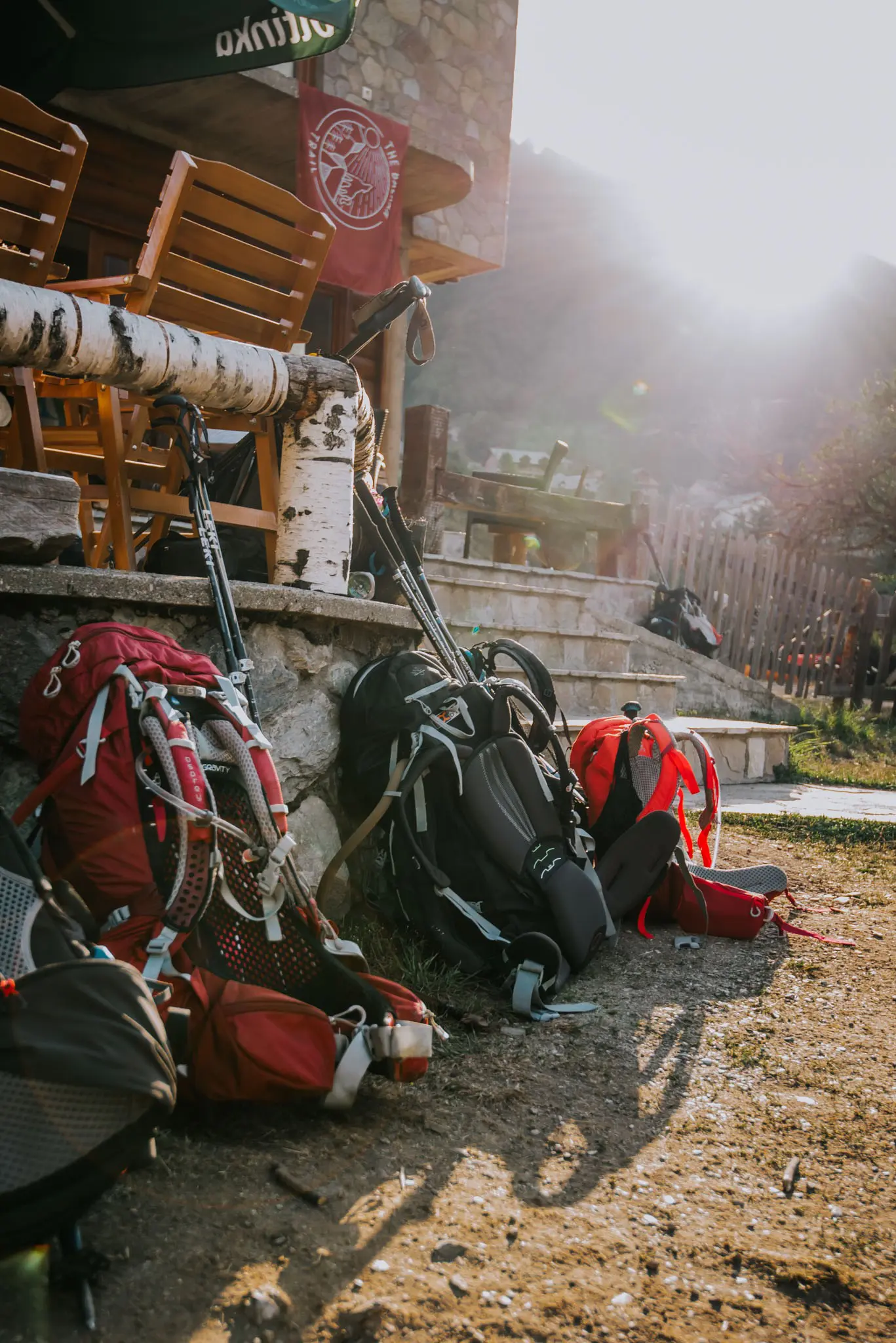
Five days of walking, three countries, six nights under canvas: your pack should prepare you for the mountains, not hold your whole wardrobe. This Balkans trekking kit list brings together the essentials for walking in Albania, Kosovo and Montenegro: what to wear, what to keep within reach, what to rent and what to leave at home. With 600 to 1,200 metres of climbing a day, every kilo has to earn its place.
Covered on this page:
- Your Balkans trekking kit list: the basics
- Which pack to choose: 30–35 litres or 65–75 litres?
- Broken-in boots, not just new ones
- What to pack for a hike in Albania: the layers
- Sleeping in a tent: kit to bring or rent
- What goes in your day pack
- Toiletries, documents and money: the small essentials
- Phone and navigation: get offline mode ready
- What to leave at home, then the final three checks
- Frequently asked questions
Your Balkans trekking kit list: the basics
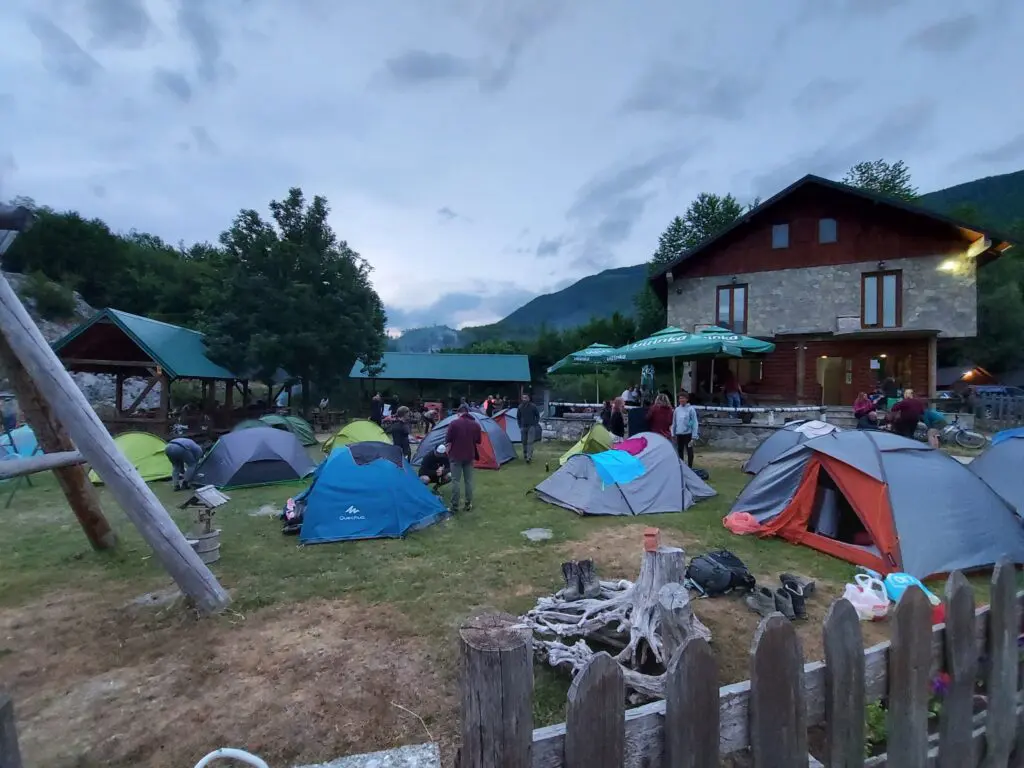
On this Peaks of the Balkans route, expect five days of walking of 11 to 18 kilometres, with 600 to 1,200 metres of climbing every day. All six nights are spent in tents, in the grounds of family-run guesthouses. So think as much about your days on the trail as about your evenings in camp.
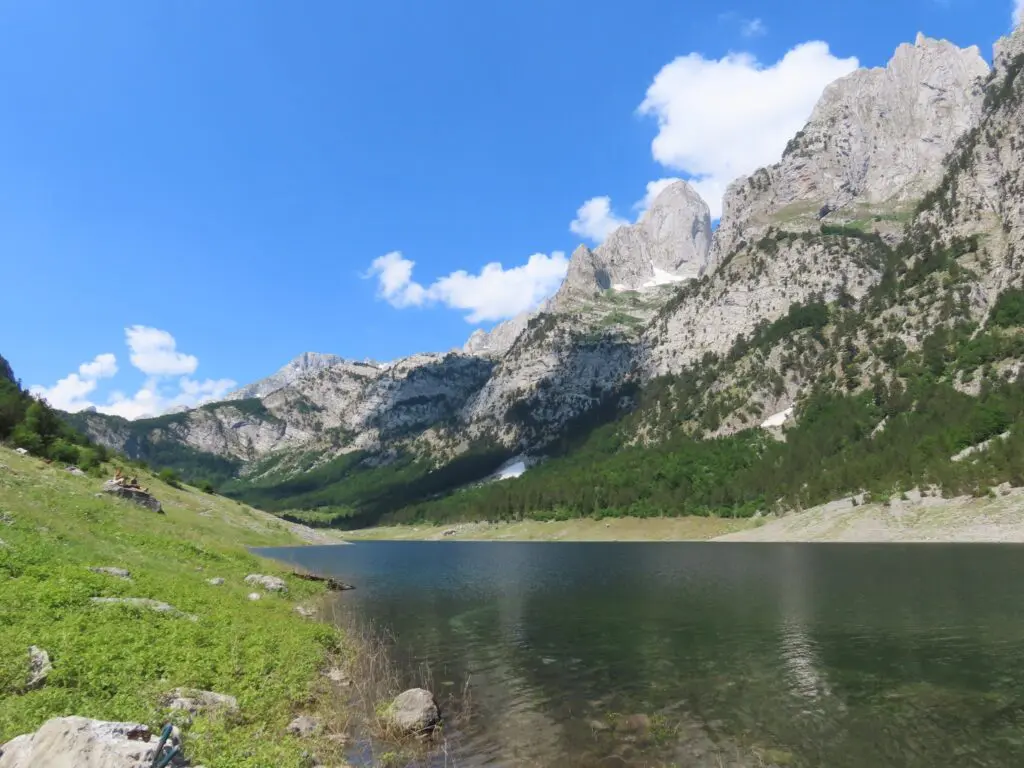
In summer the weather is generally warm, sometimes very hot and sunny. But at altitude, mornings and evenings can be cool. And mountain weather changes fast: a blue sky at the start is no reason to leave your waterproof jacket in the main bag.
The golden rule? Take less, but take what is useful. Quick-drying clothes, suitable sleeping gear and rain protection come before “just in case” spare outfits.
Which pack to choose: 30–35 litres or 65–75 litres?
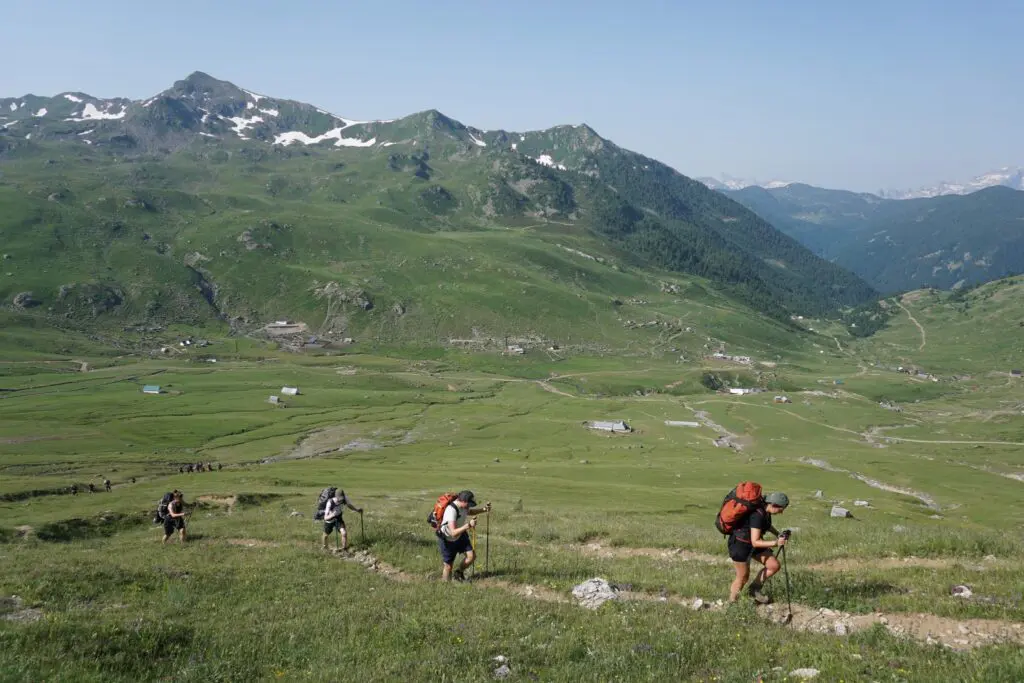
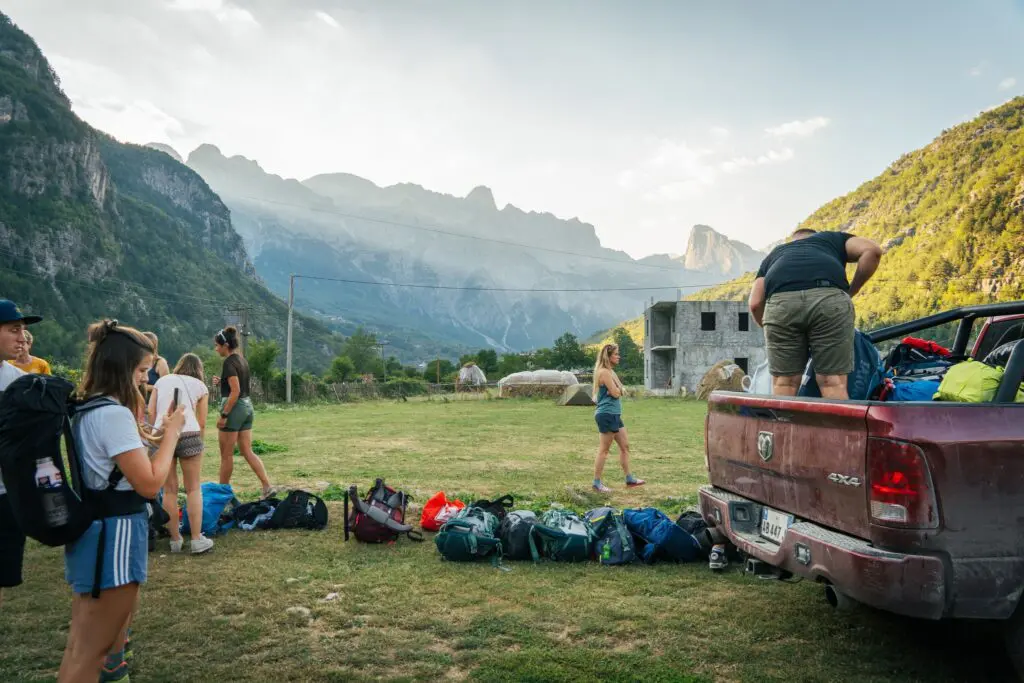
It all comes down to one very practical question: who carries your camping gear? With luggage transfer, a 30–35 litre rucksack is enough for your day's things. Your main bag travels separately. Without transfer, plan on a 65 to 75 litre trekking pack with a good hip belt, to carry the tent, sleeping bag and mat as well.
On The Balkan Trail, luggage transfer is optional and the transferred bag is limited to 12 kg. That limit includes everything you put in it: don't just weigh your clothes.
- With transfer: a 30 to 35 litre day pack and a separate main bag.
- Without transfer: a 65 to 75 litre trekking pack with a hip belt.
- In both cases: a rain cover, a waterproof liner or dry bags to protect your things.
Before you go, do a test hike with your day pack full. It is better to find an uncomfortable adjustment close to home than halfway up a climb.
Broken-in boots, not just new ones
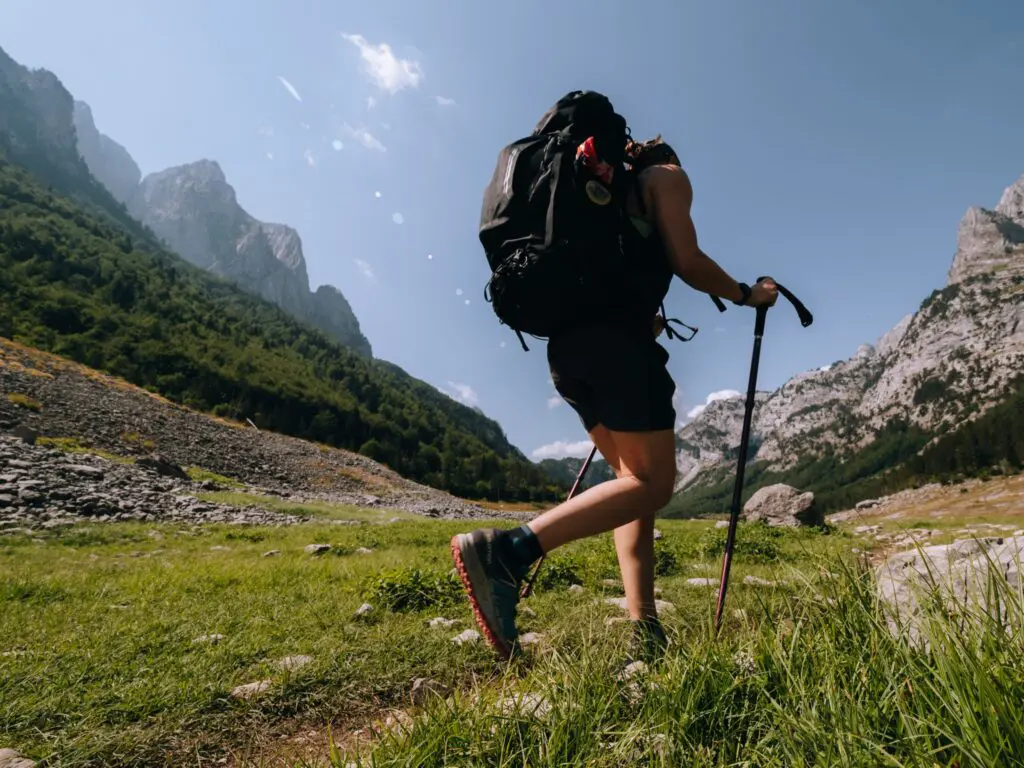
Paths can be rocky and steep. Choose category A/B boots or category B hiking boots, with ankle support and a sufficiently stiff sole. But the model is not everything: your feet need to know them already.
Do several long walks in your boots before you leave. A pair bought just before the trip hasn't proved itself yet, even if it feels comfortable in the shop.
- One pair of hiking boots that are already broken in.
- Three to four pairs of wool or synthetic hiking socks, no cotton.
- Light shoes or sandals for camp and evenings.
- Optional: thin liner socks and short gaiters against stones and wet grass.
Taking your boots off in the evening is one of life's simple pleasures. That is no reason to add a heavy second pair to your luggage.
What to pack for a hike in Albania: the layers
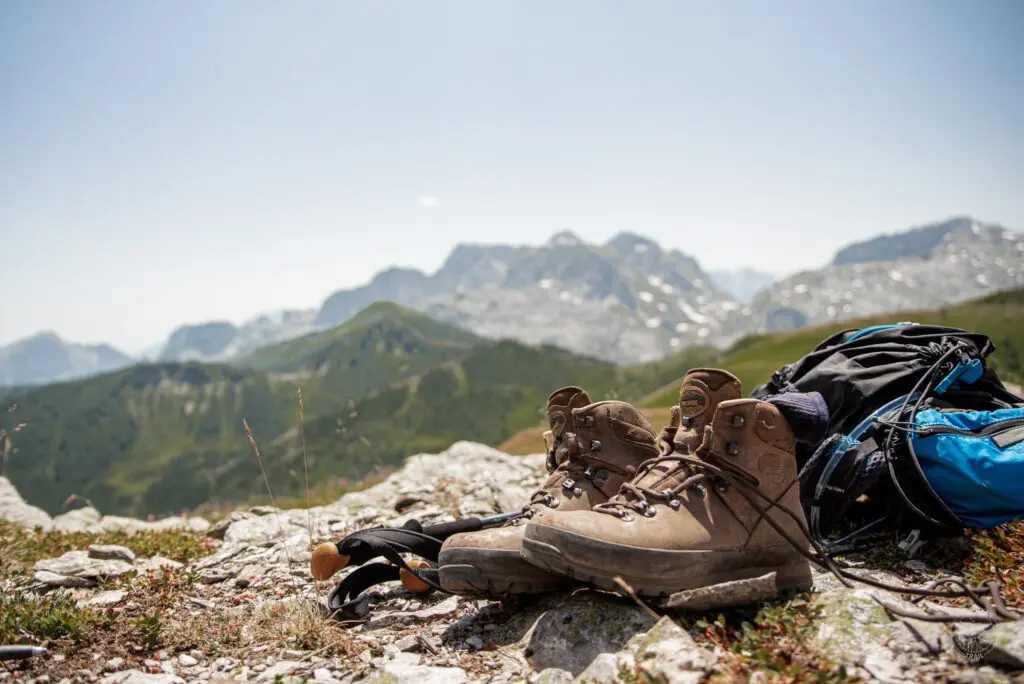
If you are searching for what to pack for a hike in Albania, start with the layering system. It works just as well in Kosovo and Montenegro: you adapt your outfit to the heat, wind and cool air, rather than packing a different garment for every situation.
- Base layer: two to three quick-drying T-shirts, in merino or synthetic fibres.
- Warm layer: a fleece or a light insulated jacket for mornings, evenings and passes.
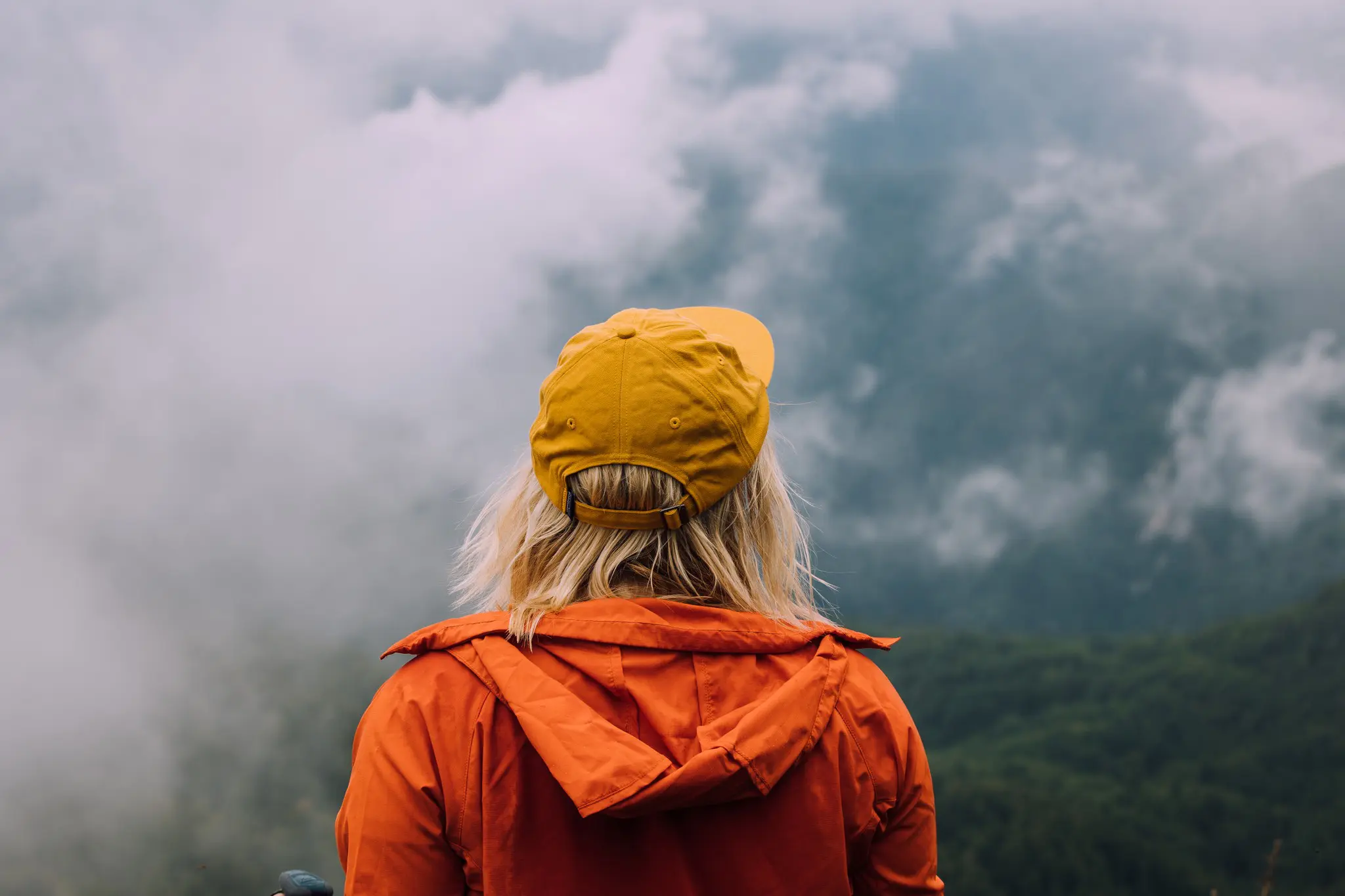
- Outer protection: a waterproof, breathable jacket with a hood. Waterproof trousers are useful too.
- Hiking trousers, possibly convertible, and/or shorts.
- For evenings and nights: a long-sleeved top and long bottoms in a base layer, a hat and light gloves.
- A sun hat or cap, a neck gaiter and sunglasses.
- Underwear for the week.
- Swimwear and a quick-drying towel: one stage lets you swim in a lake.
You don't need a clean T-shirt for every day. Small items can be washed and dried along the way. It is less glamorous than a neatly packed suitcase, but far nicer to carry uphill.
Sleeping in a tent: kit to bring or rent
After a day's walking, your bed is not the place to save on comfort. Nights at altitude can be cold: check the sleeping bag's comfort temperature carefully.
- A tent, your own or rented.
- A sleeping bag with a comfort temperature of around 5 °C.
- A sleeping mat with an R-value of at least 3, for insulation from the ground.
- Optional: an inflatable pillow, earplugs, an eye mask and a charged head torch, or spare batteries.
Don't fancy buying all this kit for one trip? For The Balkan Trail you can rent the tent, sleeping bag, mat, poles and a travel bag. If you use luggage transfer, remember that the weight of rented kit counts towards the 12 kg allowed.
What goes in your day pack
Your main bag can travel without you. These things can't: they need to stay within reach while you walk.
- Water: capacity for 1.5 to 2 litres, in bottles or a hydration bladder. In great heat you may need more.
- Snacks for breaks between meals.
- Your rain jacket and a warm layer, always.
- High-factor sun cream and lip balm.
- A small personal first-aid kit: blister plasters, medical tape, painkillers, disinfectant and your usual medication.
- Toilet paper and a small bag to carry it out.
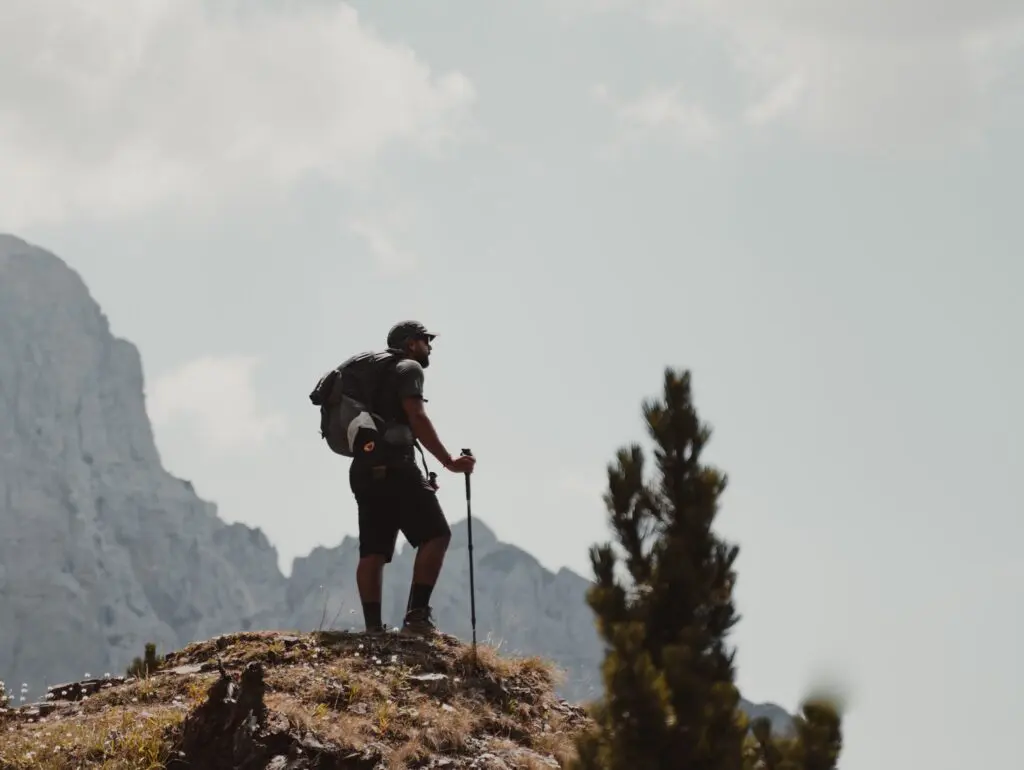
- Walking poles, strongly recommended and essential on steep descents.
That is the heart of the pack. Before adding anything, ask yourself whether you will really use it during the day. Five days of climbing and descending is a long time to carry something that never comes out.
Toiletries, documents and money: the small essentials
For toiletries, stick to small sizes: toothbrush, toothpaste, soap and deodorant, biodegradable where possible. Add hand sanitiser and insect repellent.
For documents and money, prepare:
- Your ID card: it is enough for citizens of the European Union in Albania, Kosovo and Montenegro. Check the rules that apply to your nationality.
- Your health insurance card and your travel insurance details.
- About €200 in cash: the mountain stages have no cash machines or card terminals.
The euro is widely accepted, but change may be given in Albanian lek. Kosovo and Montenegro use the euro. So don't rely only on your bank card for the mountain section.
If you are flying
Gas cartridges are banned on planes. Walking poles are often refused in the cabin: check your airline's rules and put them in the hold if necessary. Wear your hiking boots while travelling to save weight and space in your luggage.
What to leave at home, then the final three checks
Cotton clothes, jeans and bulky towels can stay at home. The same goes for multiple spare outfits. If your meals are taken care of, leave the cooking kit behind too: there's no point carrying a kitchen you won't use.
Before you close your bag, run these three checks:
- Weigh your bag: the carried bag must not exceed 12 kg.
- Walk with your daypack loaded: test the weight and the adjustments in real conditions.
- Check the weather: adjust your kit to the time of your departure. To prepare for this, read our month-by-month weather guide.
The aim isn't to have the smallest bag at all costs. It is to have what you need to walk, sleep and enjoy the mountains, without carrying the rest.
To arrive ready, also follow the 12-week training plan before you close your bag.
Frequently asked questions
What weight should my bag not exceed?
The carried bag must not exceed 12 kg. Weigh it before you leave, then walk with your loaded daypack to test the weight and the adjustments.
Do I have to buy everything to sleep in a tent?
Not necessarily: the sleeping section details what to bring and what can be rented. The rental conditions are in the Balkan Trail FAQ.
How do I adapt my kit to my departure period?
Check the weather from June to September: the layers to bring change from month to month. Then test your kit during the outings of the training plan.