
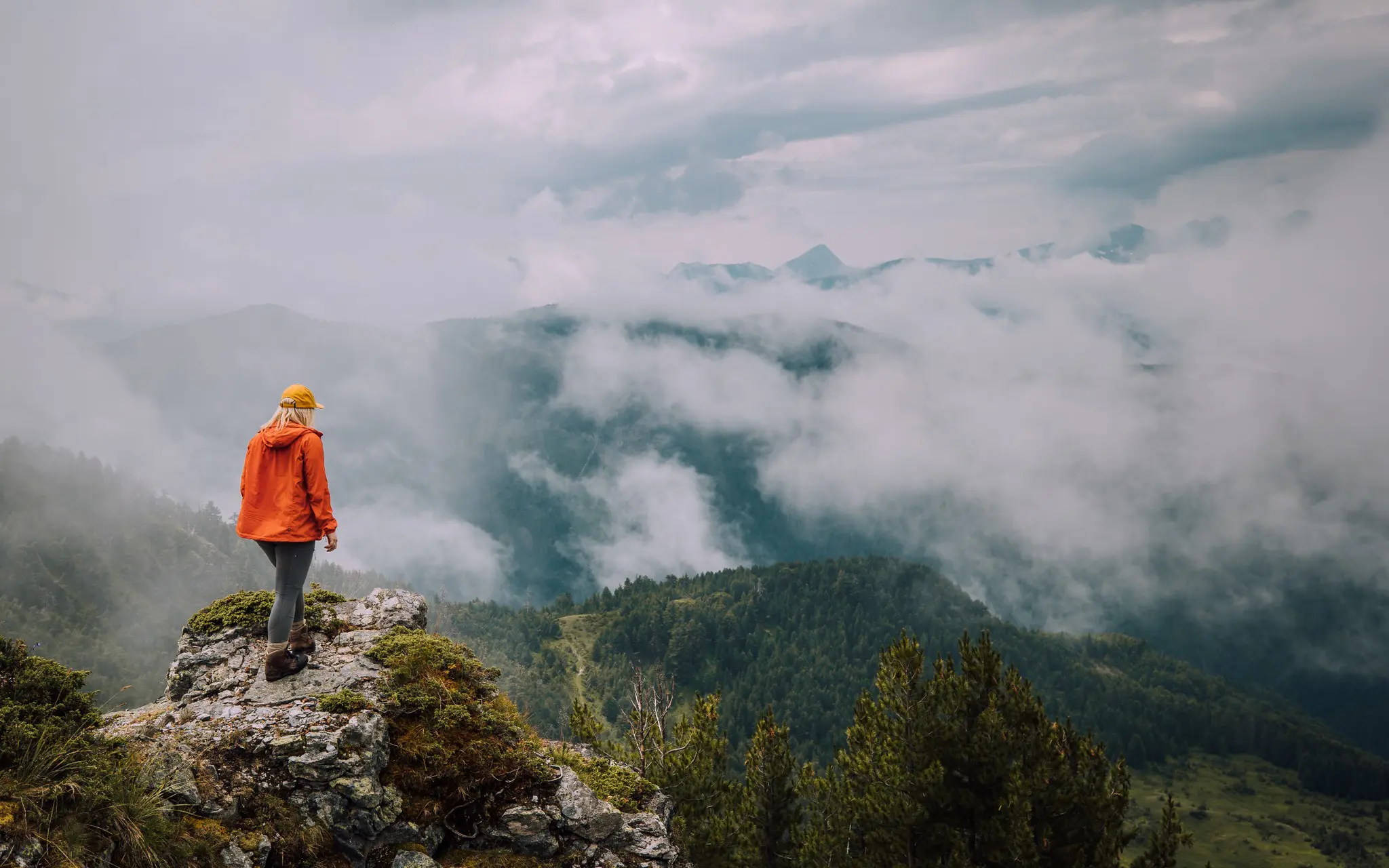
“Is the Balkan Trail for me?” If you're asking yourself that, you probably don't need a promise that this adventure is accessible to everyone. You want to know whether your legs will keep up, whether the descents will be manageable, and whether six nights under canvas will make you smile or miss your bed. Here is an honest self-test for considering your first multi-day trek: not a fitness exam, and not a speech to convince you at all costs.
Covered on this page:
- What five days of walking really demand
- Test 1: is your hiking fitness good enough?
- Test 2: are you comfortable on a real mountain trail?
- Test 3: your first multi-day trek, yes, but under canvas?
- Test 4: do the practical conditions suit you?
- What makes the adventure easier, without removing the climbs
- Is the Balkan Trail for me? Your verdict
- Frequently asked questions
What five days of walking really demand
Let's start with the numbers, before we get carried away by the scenery. The Balkan Trail is a guided seven-day trip, including five full days of walking on the Peaks of the Balkans, through Albania, Kosovo and Montenegro.
In total you cover about 75 km. The stages are 11 to 18 km and five to eight hours on the trail, breaks included. But distance only tells part of the story: the daily ascent is around 600 to 1,200 m. Some descents reach about 1,100 m in a single day.
The Valbona Pass peaks at nearly 1,800 m, and snowfields can linger early in the season. The last day ends with a long, steep descent to Theth, for which poles are considered essential. You also sleep six nights in your own tent, in the grounds of family-run guesthouses. That is the setting: real mountain days, then a simple life in the evening.
Test 1: is your hiking fitness good enough?
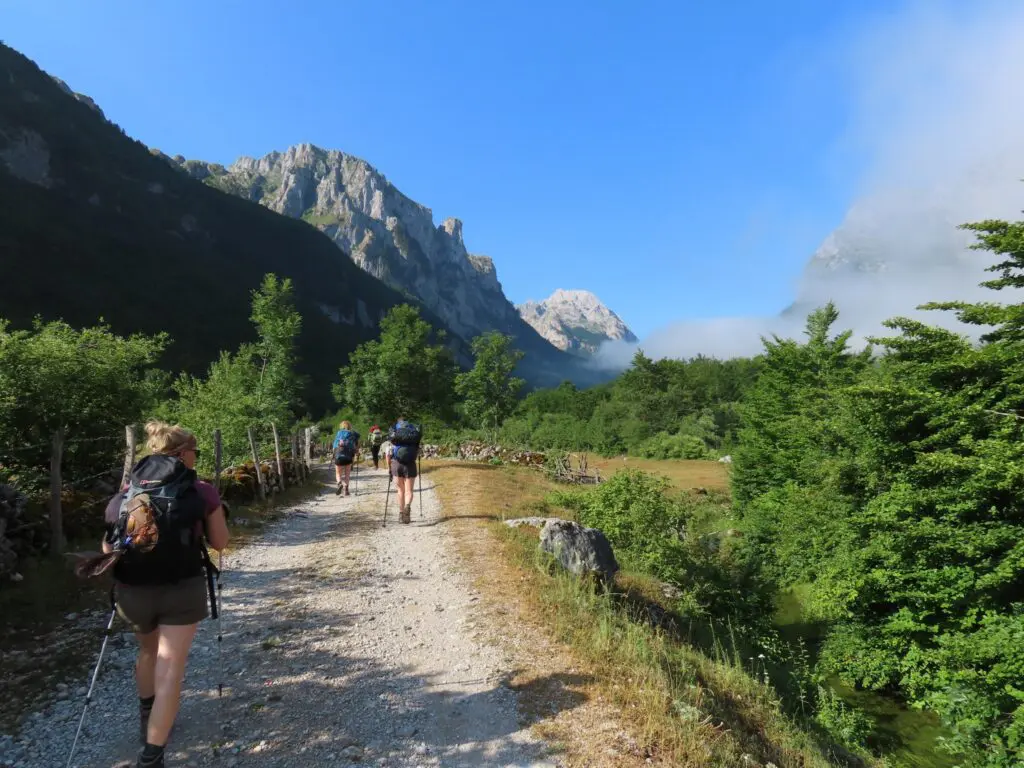
There's no need to ask yourself whether you're “sporty” in the absolute. Your hiking fitness is better measured with a few very concrete questions:
- Can you walk 15 km with a few hills and still enjoy your evening meal?
- Can you do it again the next day?
- Have you ever climbed at least 600 m in a single outing?
A yes to the first question is a good basis. The second counts just as much: over several days, overnight recovery matters more than speed. The goal is not to arrive first, but to be able to set off again.
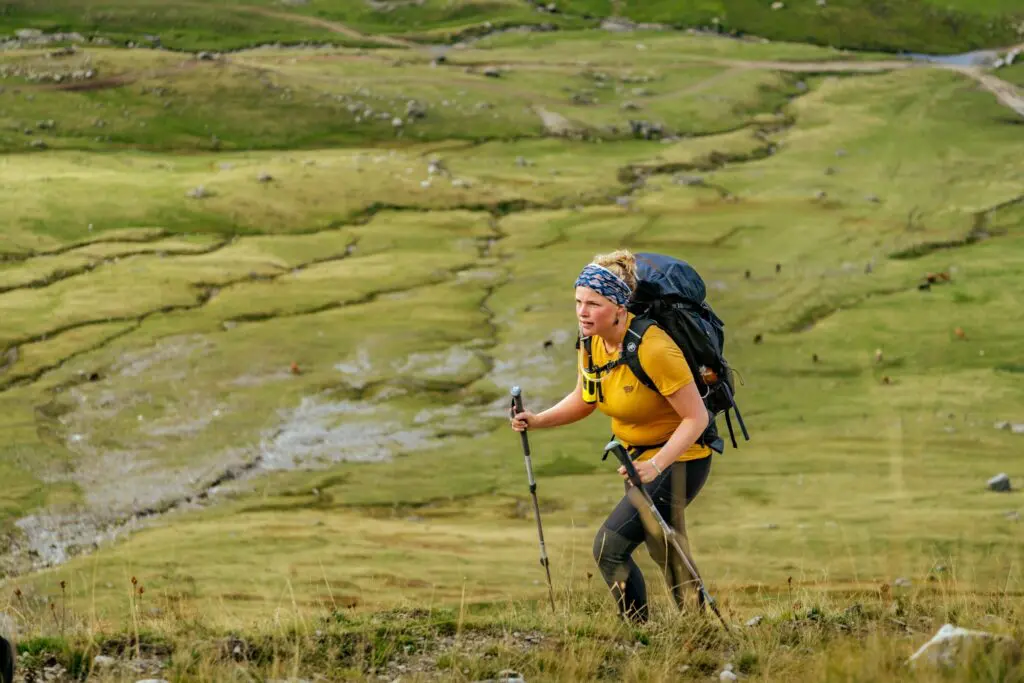
The third question deserves your attention if you mostly walk on flat ground. An outing in the Ardennes, the Eifel, the Vosges or the Alps, or a long stair session, shows you what a sustained climb involves. To give a sense of scale, 800 m of ascent is roughly the height of 260 to 270 floors.
If you regularly hike 15 to 20 km with 600 to 800 m of ascent at a steady pace, the stages are realistic. If you've never gone beyond 10 km or done a prolonged climb, it's better to allow several months of preparation. That isn't a definitive no: it's a useful “not yet”.
Your joints have a say too
If you have problems with your knees, hips, back or heart, or any other health difficulty, discuss the trip with your doctor before booking. This test provides general information: it is not a substitute for medical advice.
Test 2: are you comfortable on a real mountain trail?
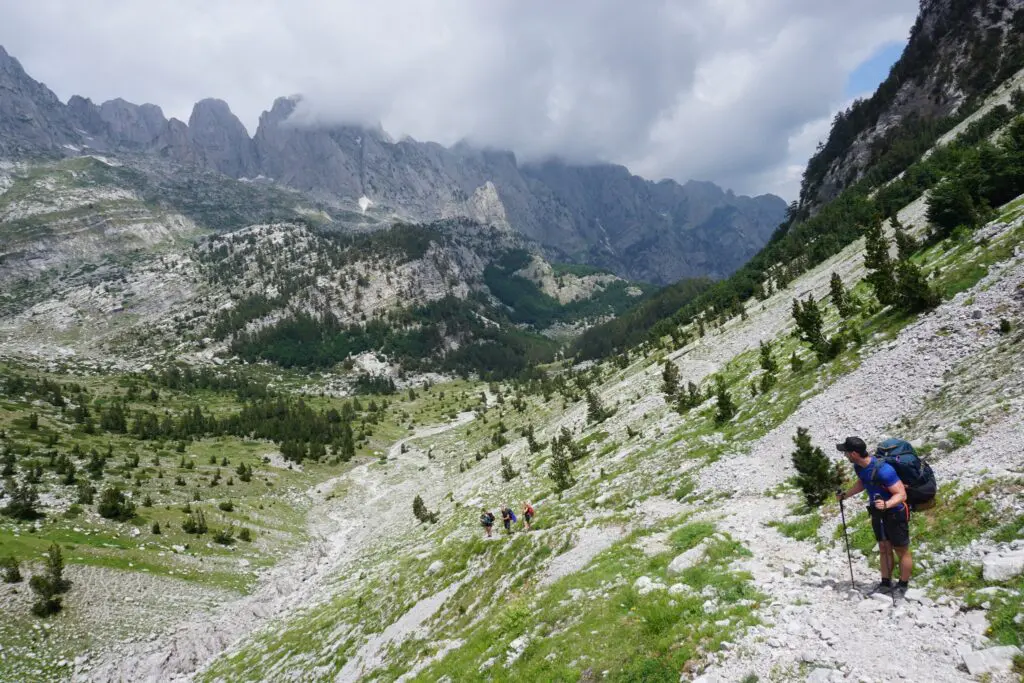
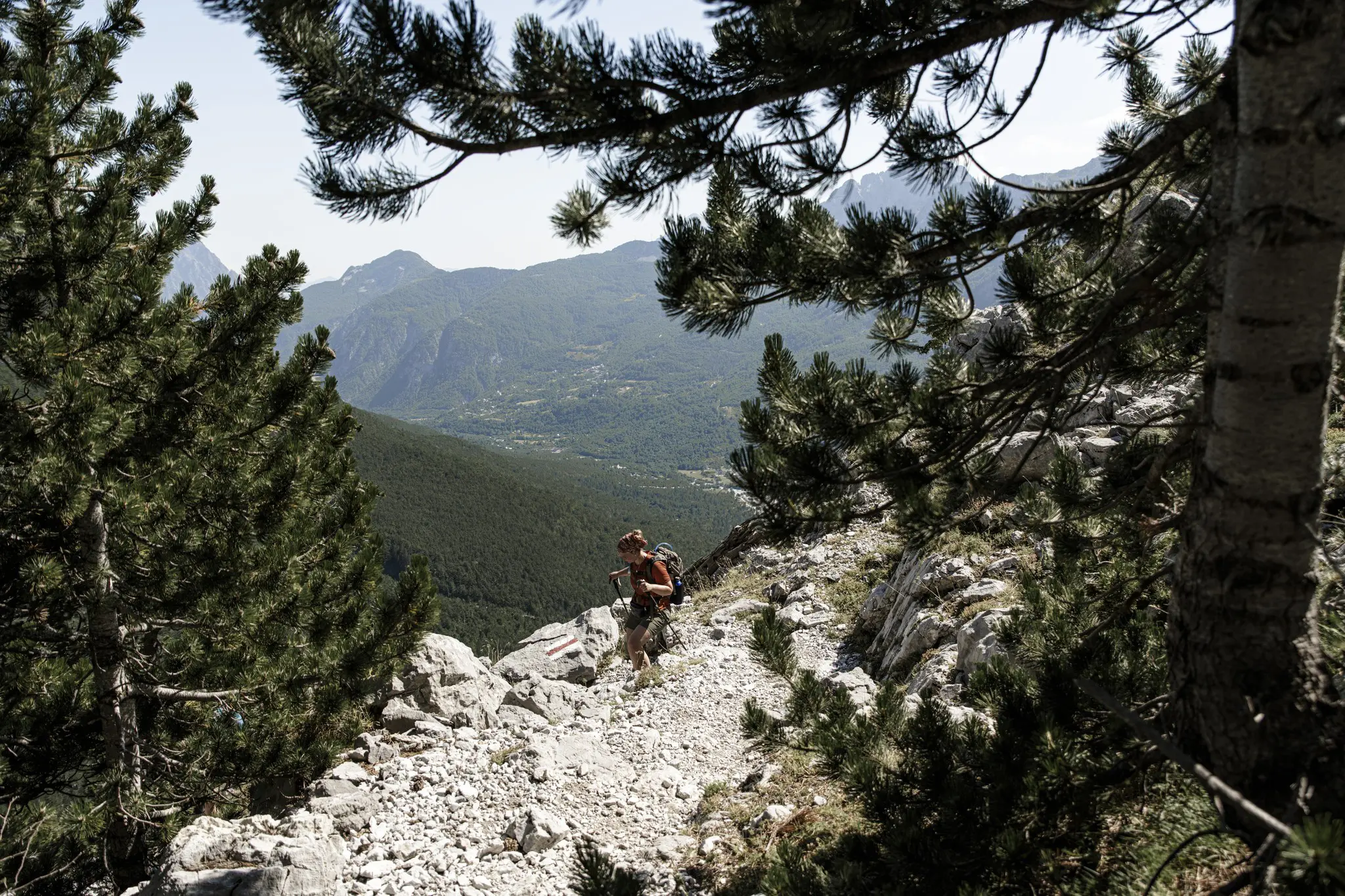
A regular forest track and a rocky trail don't call for the same attention. Here you will meet uneven sections, loose stones, grassy slopes, forest paths and ridges. Some stretches are steep, both uphill and downhill.
The good news: you don't need to know how to climb, or have any experience of exposed via ferrata. You do need a sure foot and reasonable balance, though. Ask yourself: when the ground gets uneven, am I still comfortable moving forward?
Don't judge your preparation on the climbs alone either. Descending often puts more strain on the knees and toes. The long final descent to Theth is therefore not a detail to forget on the grounds that “it's downhill”. Category A/B or B boots, already broken in before departure, give support on this terrain. Discovering them on the first morning would leave a little too much room for surprise.
Test 3: your first multi-day trek, yes, but under canvas?
This trip is also for people for whom it will be a first multi-day hike. So you don't need a long record of trekking trips to consider setting off. But you need to distinguish two things: knowing how to walk for a day and enjoying that rhythm for five days.
On the third and fourth days, tired legs no longer feel quite like those of a Sunday stroll. And when the walking is over, you don't get the comfort of home back. Ask yourself honestly:
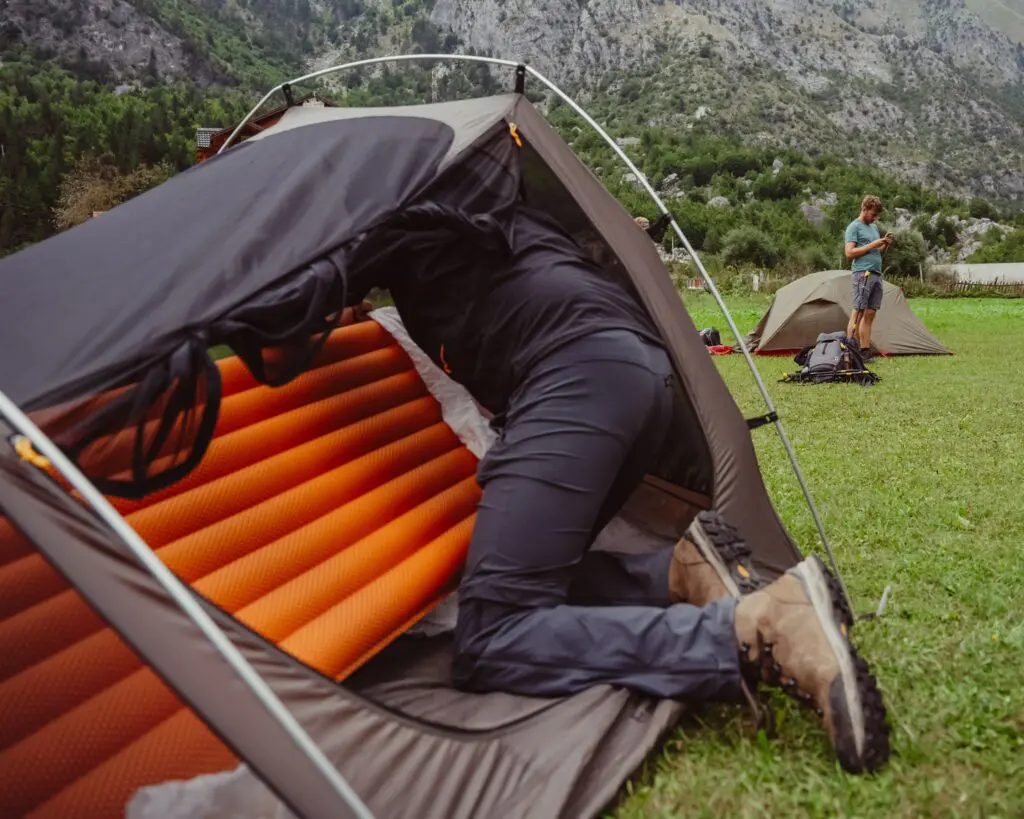
- Do six nights in my tent appeal to me?
- Am I comfortable with shared bathrooms?
- Can I accept often slow Wi-Fi and limited mobile coverage?
- Do I prefer remote landscapes and local hospitality to comfort?
The weather is part of daily life too. In the mountains, the weather can quickly go from hot and sunny to cool and damp. Mornings and evenings at altitude, notably at Dobërdol, can be cold.
If your hesitation is mostly about this simple life, our complete guide to the Peaks of the Balkans can help you picture it. The aim isn't to persuade you to love camping, but to check that this part of the trip genuinely appeals to you.
Test 4: do the practical conditions suit you?
A few simple checks avoid unpleasant surprises. The trip is open to people aged 16 to 65, and those under 18 must be accompanied by an adult. An ID card is enough for Albania, Kosovo and Montenegro.
On the mountain stages there are no cash machines or card terminals: allow about €200 in cash. Dogs cannot take part. Gluten-free meals are possible on request.
Travelling alone? Reviews often mention the group atmosphere. Solo travellers who rent a tent receive a two-person tent. The trip suits reasonably fit hikers in particular who want a first or second mountain trek without having to organise everything themselves. How comfortable you are with walking and simple living remains the best guide for deciding.
What makes the adventure easier, without removing the climbs
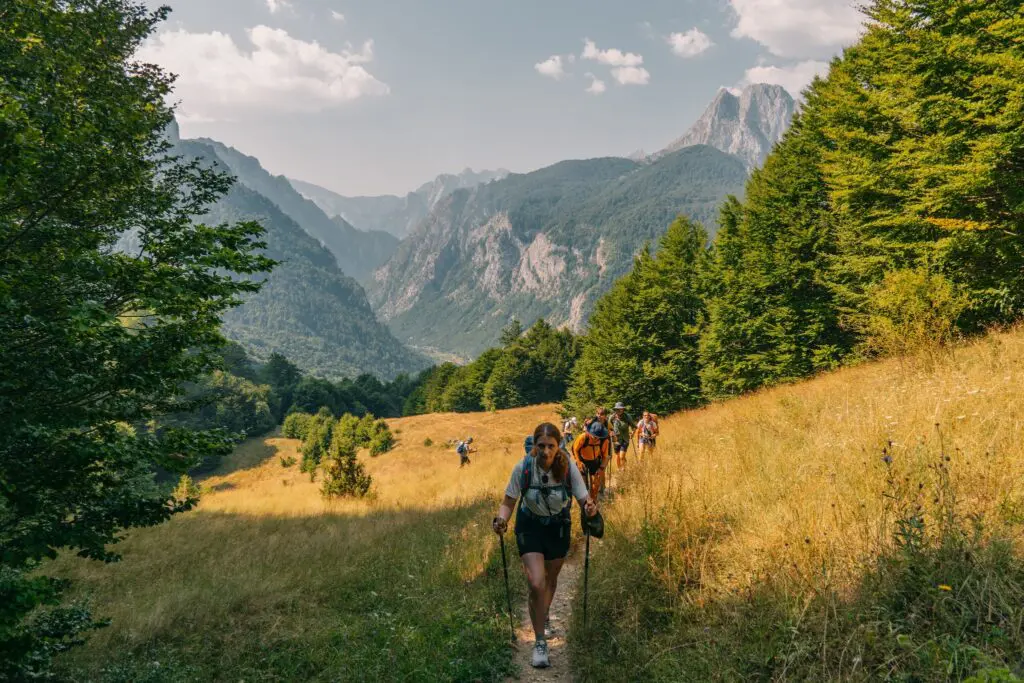
You don't have to manage everything alone. Travelbase guides and an accredited local guide accompany the group: one guide walks at the front, another brings up the rear, and the others spread out in between. You walk at your own pace, and the group stays together in bad weather.
Several options also ease daily life:
- Luggage transfer: your main bag, limited to 12 kg, travels by 4×4 or, once, by horse. You then carry only a 30 to 35 litre day pack. About 75% of participants choose this option. Without it, you carry everything in a 65 to 75 litre pack.
- Meals: the option includes three meals a day prepared by the host families. So you don't have to carry your food. The route has no supermarkets, only a few mountain bars.
- Kit rental: tent, sleeping bag, mat and poles can be rented. There's no need to buy a whole set of equipment to try multi-day trekking.
A training programme, a full kit list and an app with the offline route and GPX file are included. Some stages begin or end with a short minibus transfer, for example to Ceremi or the guesthouse in Valbona.
Check the Balkan Trail FAQ to clear up your practical questions. These aids reduce the load to carry and the organisation to plan, but the kilometres and the ascent are still there.
Is the Balkan Trail for me? Your verdict
Do you answer yes to the four tests? You very probably have the necessary foundations, provided you train in the months before departure. You are comfortable with the distances, the climbs, the uneven terrain and the nights under canvas: it all fits together.
Is your doubt mostly about fitness? Start a structured programme twelve weeks before departure and add hills or stairs every week. If you are starting from further back, give yourself several months. Better to arrive prepared than to rely solely on the enthusiasm of the first morning.
Is your hesitation about camping or comfort? Take the time to read the testimonials and practical information before deciding. Loving the mountains doesn't necessarily mean loving sleeping in a tent, and that is perfectly acceptable.
The good sign isn't the absence of any apprehension. It's being able to look at what the trip asks of you and say: “I know what to expect, and I want to prepare for it.”
To move from wanting to preparing, follow the 12-week training plan, then check your pack against the kit list.
Frequently asked questions
What distance do you cover each day?
The stages are between 11.6 and 17.3 km, with ascents and descents every day.
How do I prepare?
A training programme is sent after registration. In the meantime, the 12-week training plan lays the foundations.
What is the crossing of the Valbona Pass like?
It is the Theth–Valbona stage: 11.6 km, about 1,060 m of ascent and 680 m of descent. Everything is covered in the guide living and preparing the Theth–Valbona crossing.
What kit should I plan for?
It's all in the Balkans trekking kit list: pack, boots, layers and day pack.