
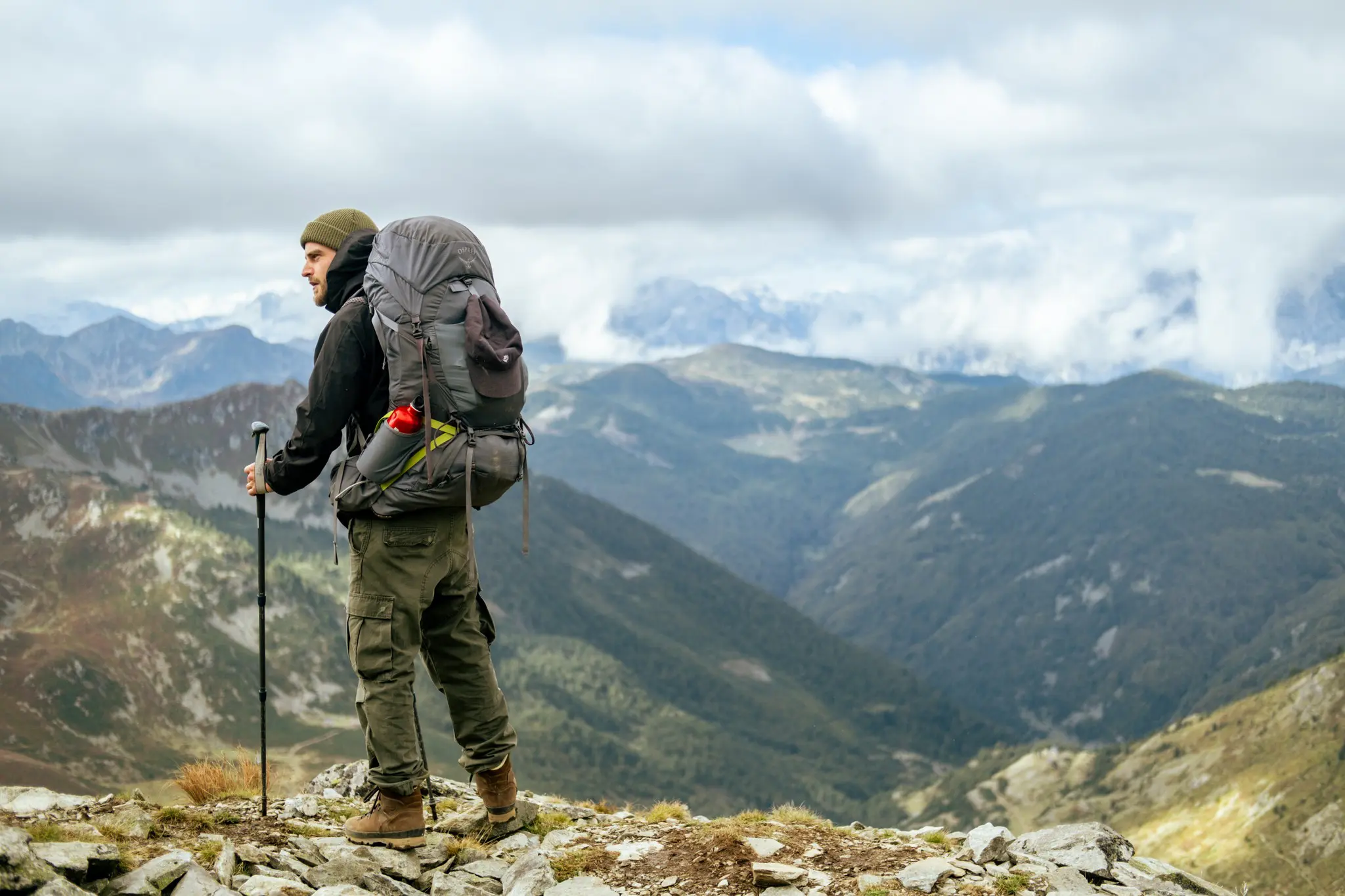
Five days walking through the mountains of Albania, Kosovo and Montenegro sounds wonderful. But when your usual stroll follows a perfectly flat canal, a question soon arrives: how do you prepare your legs? This Peaks of the Balkans training plan offers a 12-week progression, with walks, stairs and a few hilly outings. The aim isn't to become an athlete, but to be able to enjoy the scenery without thinking only about the next break.
Covered on this page:
- Peaks of the Balkans training plan: the target to aim for
- Training in flat country: where to find climbs?
- Setting up a routine that fits your week
- Weeks 1 to 4: building a solid base
- Weeks 5 to 8: adding ascent
- Weeks 9 to 11: rehearsing trek conditions
- Week 12: arriving with rested legs
- The habits that matter as much as the kilometres
Peaks of the Balkans training plan: the target to aim for
On the Peaks of the Balkans you walk five days in a row, with stages of 11 to 18 km, between 600 and 1,200 m of climbing and up to around 1,100 m of descent. Allow 5 to 8 hours a day, breaks included. So it isn't just a matter of kilometres: you also need to learn to climb, descend and set off again the next day.
Your training goal is simple: to walk comfortably 15 to 20 km with about 800 m of ascent, two days in a row, with the pack you will use out there. On the Balkan Trail, the stages are guided and you walk at your own pace. Building your endurance will help you cope better with that sequence.
This programme is general and intended for healthy adults. It is not a substitute for medical advice. If you have an injury, a health problem or have been inactive for a long time, see your doctor or a physiotherapist first.
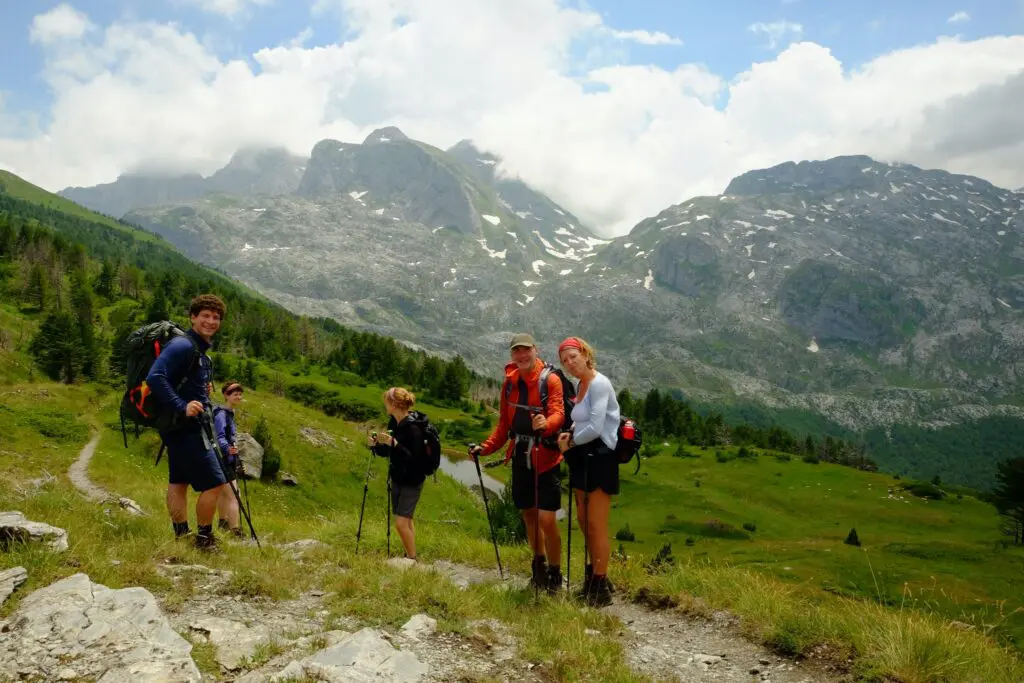
Training in flat country: where to find climbs?
Good news: to train in flat country you don't need to find a mountain behind your house. A short climb, repeated several times, already works the legs. And for long outings, a few nearby regions offer what you need to build proper hill-walking training.
- The Belgian Ardennes: the valleys of the Ourthe, Amblève, Semois and Lesse offer climbs of 100 to 250 m. Combined in a loop, you can accumulate 500 to 800 m.
- The High Fens and eastern Belgium: around the Signal de Botrange, Belgium's highest point at 694 m, the gentler terrain suits long distances.
- The German Eifel: the Eifelsteig links Aachen and Trier over about 313 km, with many day stages that offer ascent.
- Luxembourg: the Mullerthal Trail, about 112 km, has short, steep sections with rocks and steps.
- South Limburg: the Vaalserberg, at about 322 m, and the neighbouring hills let you repeat climbs and descents.
During the week, think smaller: the 374 steps of the Montagne de Bueren in Liège, the stairs of a building, stands, dunes or dykes. In the gym, a stair machine or an inclined treadmill also does the job. What matters is consistency, not the view.
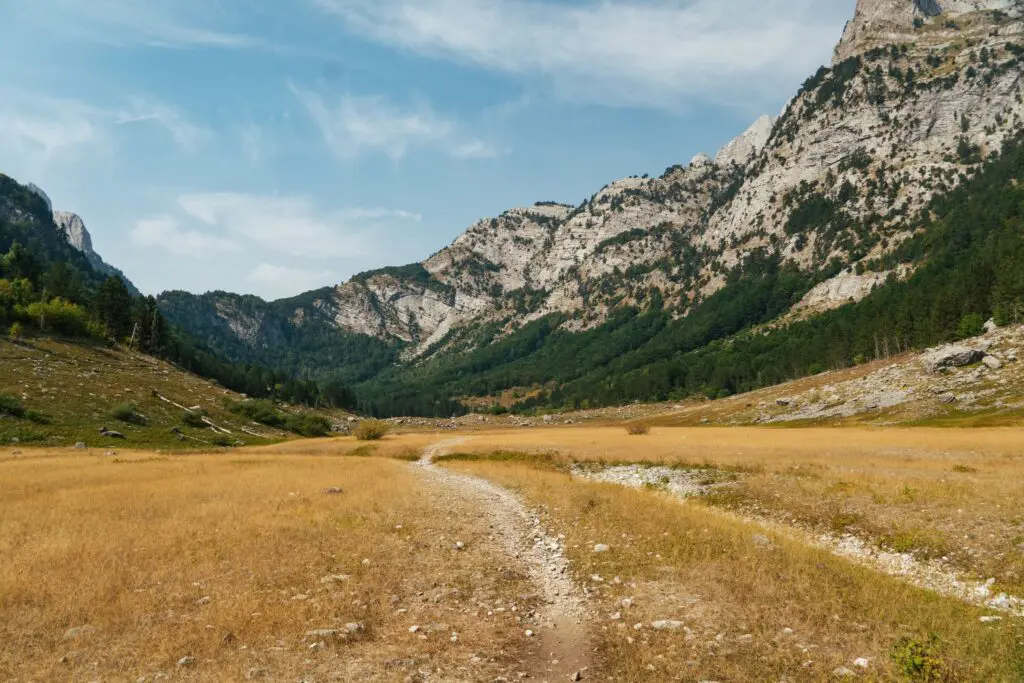
A handy guide for stairs
One floor is about 3 m high. To climb 100 m, you therefore need roughly 33 floors. It's a concrete way to measure your session when the summits are far away.
Setting up a routine that fits your week
The programme is built around three to four sessions a week: one or two short outings during the week, strength work and a long hike at the weekend. The first weeks include two short strength sessions, which you can combine with your walking days.
Increase the load gradually. The commonly quoted guideline is about 10% a week, but keep a lighter week every four weeks. The progression should leave you able to recover, not exhaust you before you even leave.
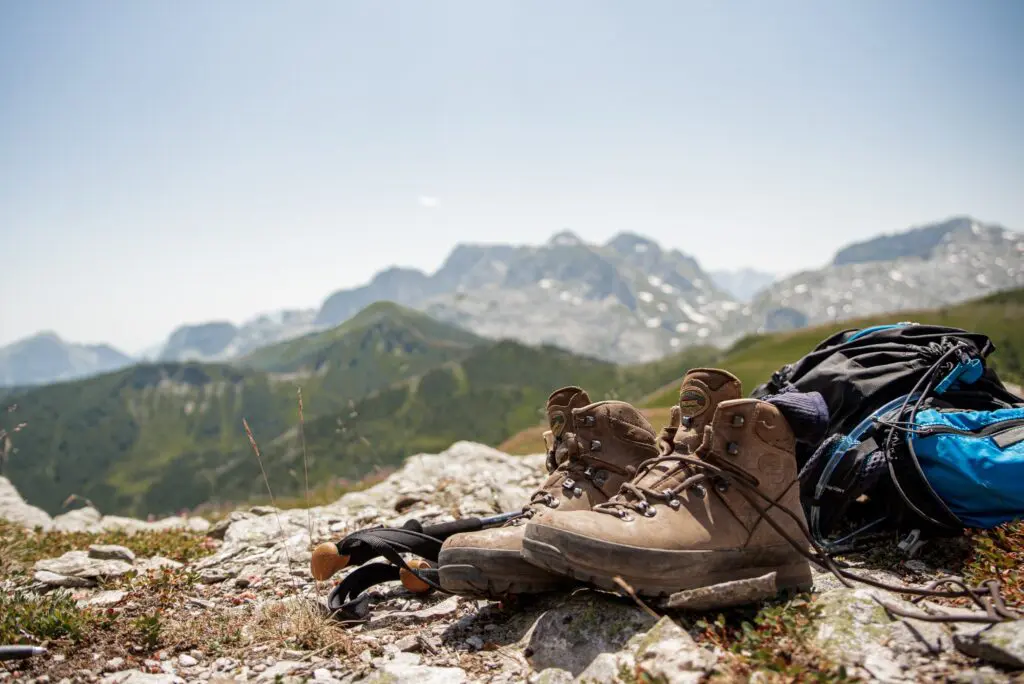
Use your future walking boots and socks from the start of training. This is the time to break them in and spot any rubbing. For the pack, start empty if necessary, then add weight gradually up to the planned load. The size depends on how you travel: 30 to 35 L for a day pack, or 65 to 75 L if you carry everything.
Weeks 1 to 4: building a solid base
At the start, focus mainly on settling into a rhythm. You should be able to fit your sessions into your daily life and finish your walks wanting to go again. There's no need to turn every outing into a challenge.
- During the week: two brisk walks of 45 to 60 minutes, with a hill or stairs if possible.
- Strength: two sessions of 20 to 30 minutes with squats, lunges, step-ups, calf raises, planks and hip bridges.
- At the weekend: a hike of 10 to 12 km, aiming for 200 to 300 m of ascent as week four approaches.
- The pack: build up to 3 to 4 kg, with water, a rain jacket and something to snack on.
Week four stays lighter overall. Use it to check how you feel and how your feet are doing: a small hot spot deserves your attention before it becomes a problem on a longer outing.
Weeks 5 to 8: adding ascent
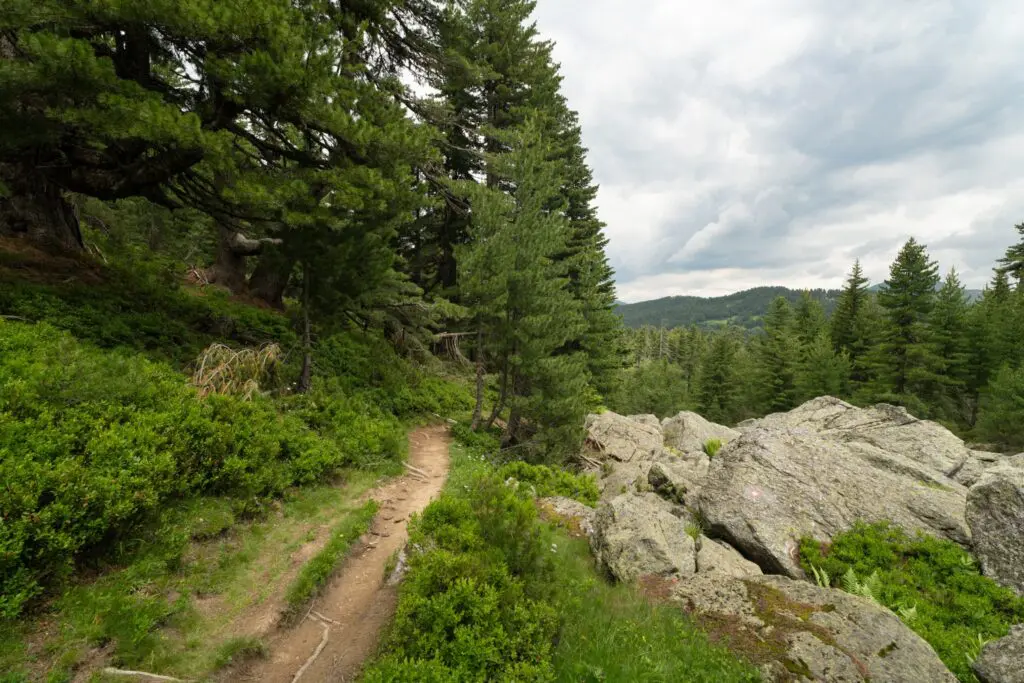
You now have a routine. Time for slightly longer climbs and legs that learn to absorb descents. An Ardennes hike or a loop in the Eifel becomes particularly useful at this stage.
- During the week: one stair or incline-walking session, gradually moving from 15 to 40 minutes of continuous climbing, plus a brisk walk.
- Strength: keep up the exercises and add single-leg work as well as slow step-downs to prepare your knees.
- At the weekend: 14 to 16 km with 400 to 600 m of ascent.
- The pack: gradually increase towards 5 to 7 kg.
In week 8, try two consecutive days, for example 15 km on Saturday and 10 km on Sunday. To keep the week lighter overall, cut back the other sessions. You discover an essential feeling: setting off again with yesterday's legs.
Weeks 9 to 11: rehearsing trek conditions
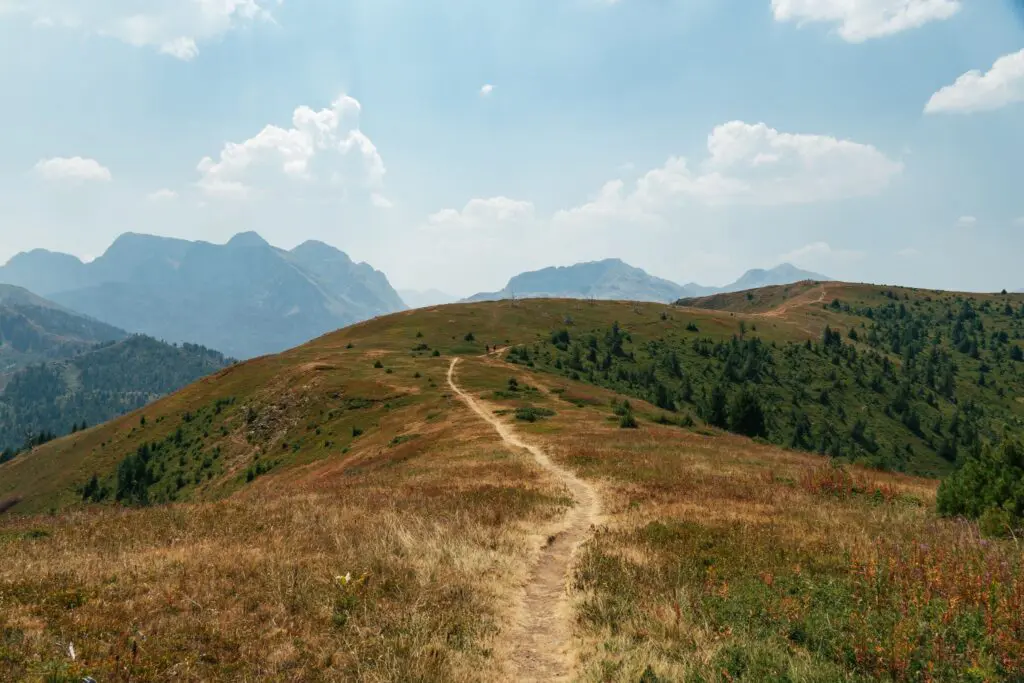
This is the most demanding phase. Your outings get closer to the final goal, with the kit and load you actually plan to carry.
- During the week: a stair session with a loaded pack. Also practise a steady, controlled descent.
- At the weekend: 16 to 20 km with 700 to 900 m of ascent.
- At least once: string together two long hiking days.
- The kit: test your jacket, your warm layer and your pack cover in the rain.
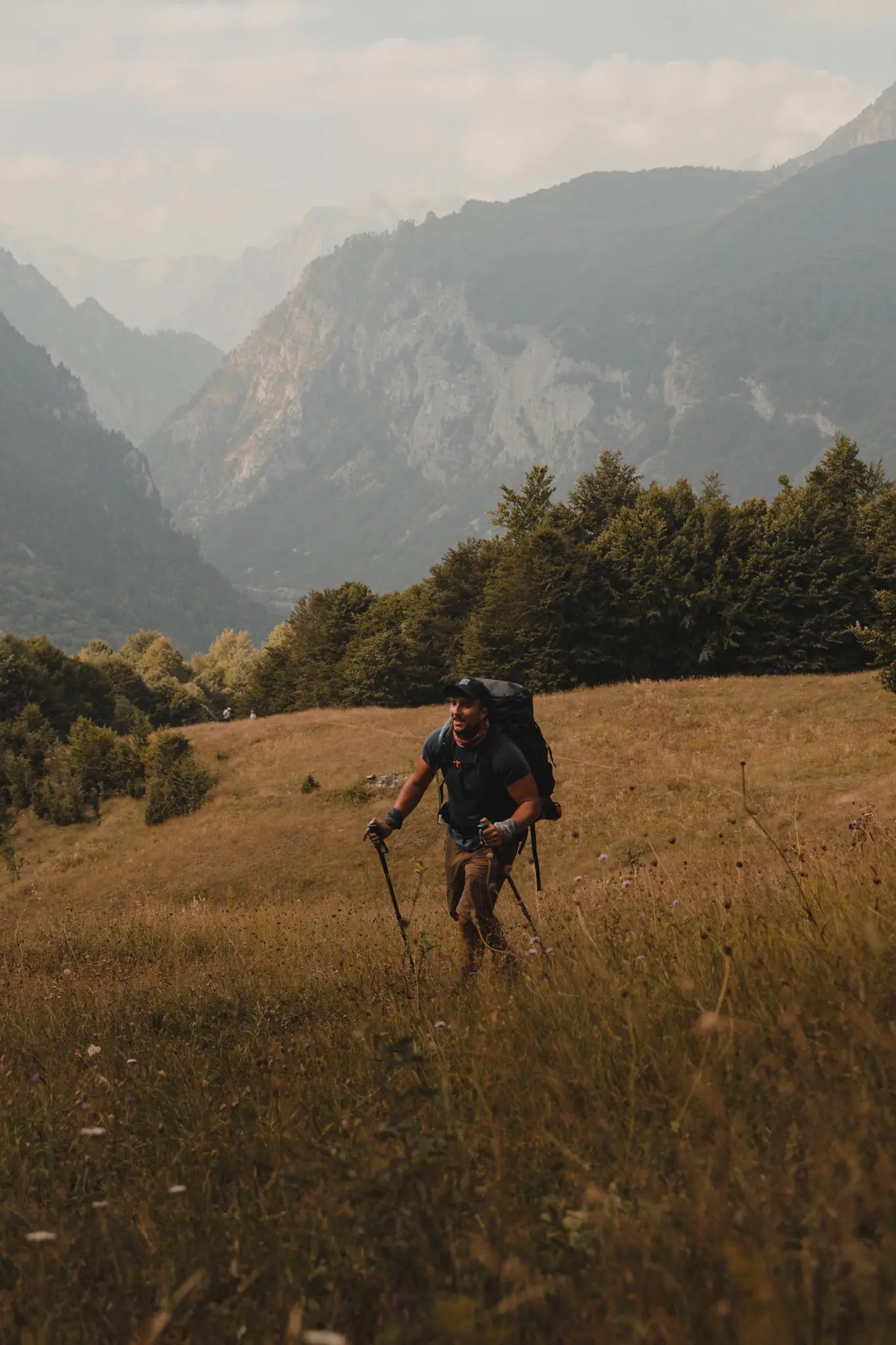
If you plan to use poles, train with them. They are considered essential for the steep final descent of the trek. Better to learn how to use them here than when your legs are already tired.
The Balkan Trail includes a training plan and a full kit list. Poles can be rented, and optional luggage transfer lets you walk with a 30 to 35 L day pack. So train with the load that matches your choice, not with an unnecessarily heavy weight.
Week 12: arriving with rested legs
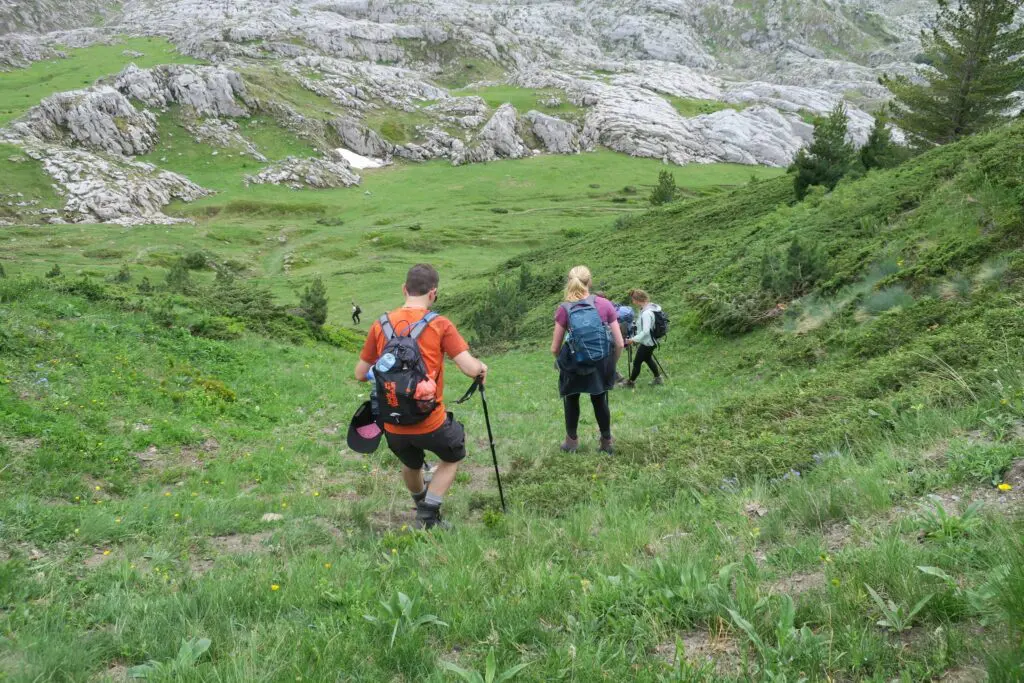
One week before departure, the work is done. Cut the volume by about half and keep two or three short, easy sessions. This is no longer the time to check how many stairs you can get through.
No new boots, no new kit. Sleep well, hydrate and let your legs recover. Arriving rested is better than adding one last big hike to reassure yourself.
To wrap up your preparation, re-read the kit list and check the weather from June to September. Unsure about your level? Take the honest test first.
The habits that matter as much as the kilometres
Walk at a pace that still lets you talk. With 5 to 8 hours outdoors every day, breaks included, endurance matters more than speed. Use your outings to get used to eating and drinking on the move too.
After long walks, check your feet and note any sore spots. Gently stretch or mobilise your calves, hamstrings and hips. And if you miss a week, don't try to make up for it by doubling the load: pick up again without turning the lost time into a punishment.
To put some scenery behind all this effort, also take a look at our complete guide to the Peaks of the Balkans. A reminder of why you're climbing these stairs: soon, the view will be very different.
When to ease off
Persistent pain, swelling, sharp pain in the knee or ankle, or pain that changes the way you walk: stop and seek professional advice. Unusual persistent fatigue or unusual breathlessness also deserves medical attention. Preparation should bring you closer to the start, not injure you.
Frequently asked questions
How long does it take to prepare?
The plan runs over 12 weeks: a solid base, ascent work, then repetitions close to trek conditions, with a final week to arrive with rested legs.
How do I train for ascent in flat country?
Stairs are a good guide: allow about 3 metres per floor, so 33 floors for 100 metres of ascent. For 800 metres of climbing, that comes to around 260 to 270 floors.
What daily distances are there on the Balkan Trail?
The stages are between 11.6 and 17.3 km, with ascents and descents every day (see the Balkan Trail FAQ). Not sure about your level? Take the honest test; for your pack, see the kit list.