
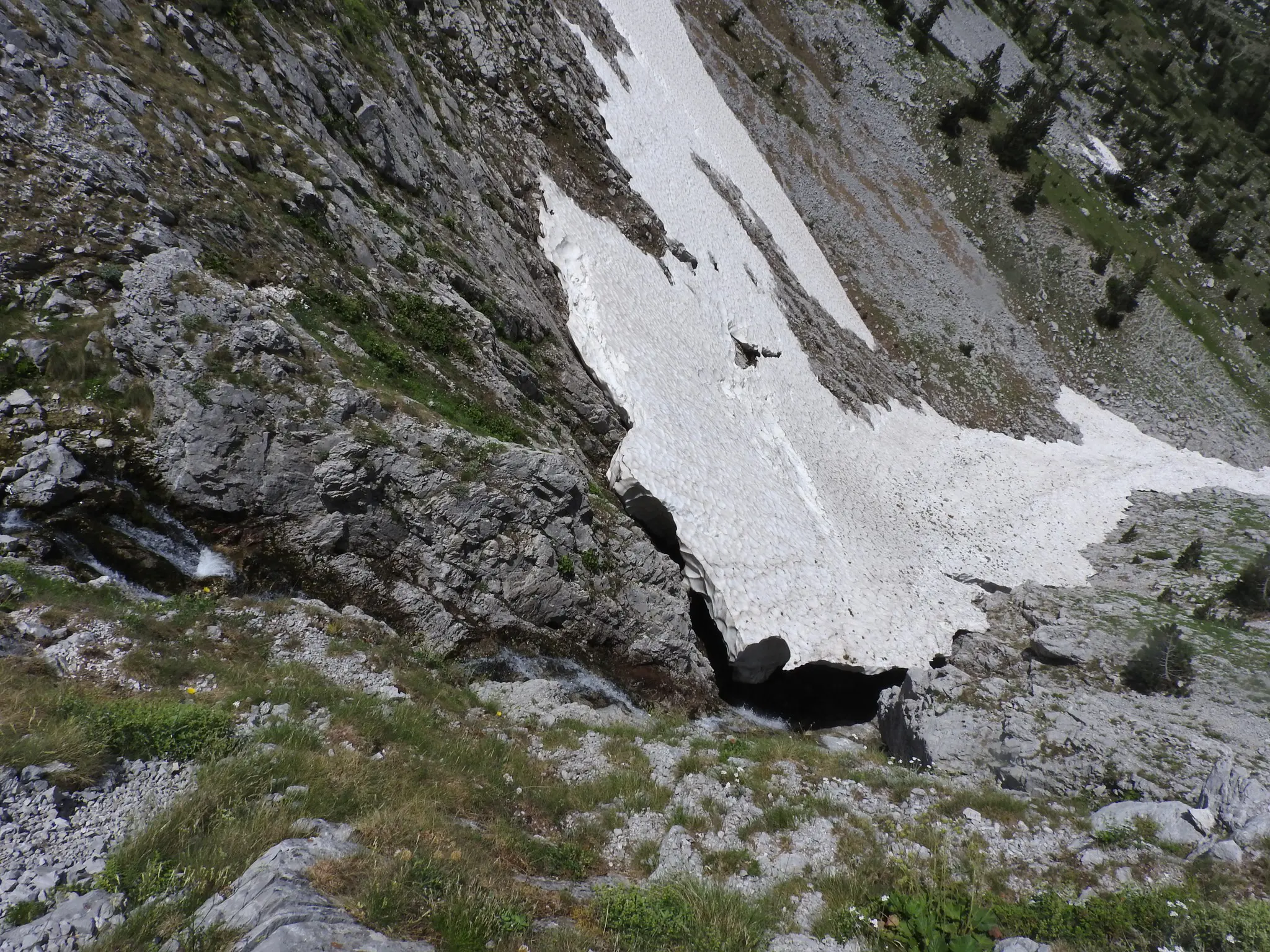
Already picturing the green valleys, the passes and the days spent walking? Before you close your bag, let's talk about Peaks of the Balkans weather. From June to September, conditions change with the weeks, but also with every climb. A warm valley, a windy pass, a cool evening at Dobërdol: here are the benchmarks for choosing your period and preparing your trek without confusing summer with guaranteed heat.
Covered on this page:
- Peaks of the Balkans weather: the valley doesn't tell the whole story
- June: flowering valleys, snow at altitude
- July: start early to enjoy the cool
- August: heat, busy trails and watching your water
- September: cooler and quieter, but less predictable
- Thunderstorms in the mountains: keep a margin all season
- On the Balkan Trail, plan for cool evenings too
- Frequently asked questions
Peaks of the Balkans weather: the valley doesn't tell the whole story
The hiking season runs roughly from June to September. Outside this window, snow and closed mountain roads make the route difficult, even impossible for most hikers. But even in summer, forget the idea of identical weather from start to finish.
Theth lies at about 750 metres above sea level. Valbona and Plav are more around 900 to 1,000 metres. The passes and ridges on the route reach about 1,800 metres to well over 2,000 metres. The Valbona Pass peaks at nearly 1,800 metres; the meeting point of Albania, Kosovo and Montenegro is higher still.
As a guide, air temperature drops by about 6 °C per 1,000 metres. With 28 °C in the valley, a windy pass can feel like 18 to 20 °C. Checking the Theth weather or the Valbona weather is therefore useful, but isn't enough to picture the conditions for the whole of your stage.
Local statistics are scarce and the figures available online vary widely. To understand the climate of the Albanian Alps, mainly remember the trends, then check the forecasts shortly before you leave.
June: flowering valleys, snow at altitude
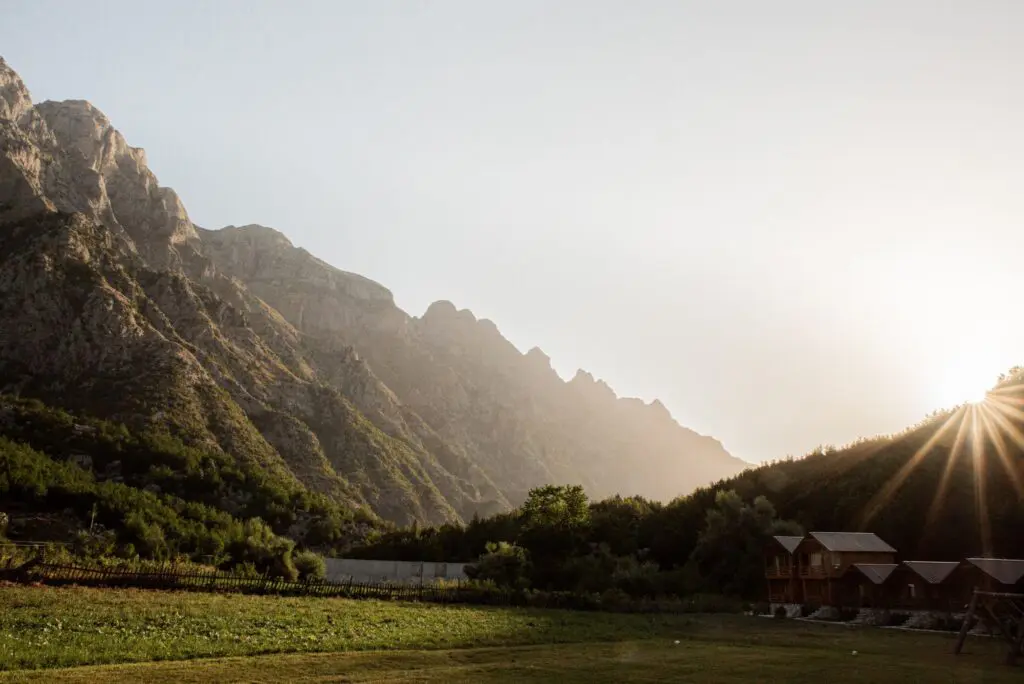
In June, the days are long and the valleys very green and full of flowers. Waterfalls and torrents carry a lot of meltwater. It is the month that most evokes a still-fresh mountain, with pleasant temperatures for walking in the valley.
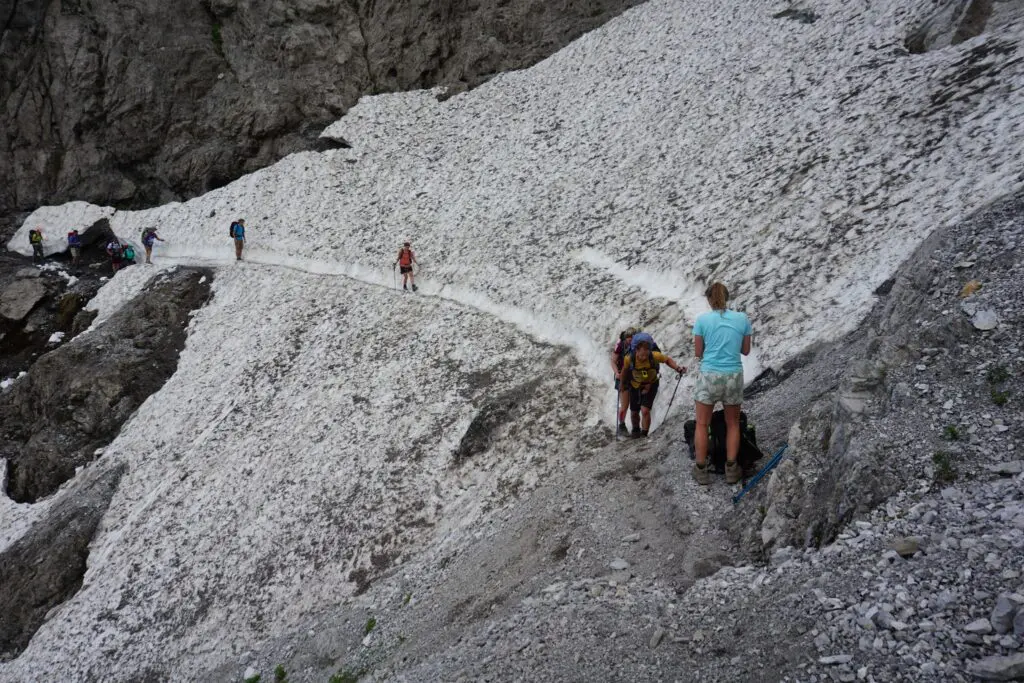
However, snowfields often persist on north-facing slopes and high passes, especially after a snowy winter. They can generally be crossed with care, good boots and poles, but can be slippery in the morning. A beautiful day therefore doesn't mean the terrain is entirely clear.
Showers and thunderstorms are regular. Nights can also be cool, particularly at altitude. If you choose June for its green landscapes and long days, plan to be able to cover up as much as to protect yourself from the rain. The T-shirt that feels pleasant in the valley won't necessarily be your favourite outfit once you get higher up.
July: start early to enjoy the cool
July is generally the hottest and most stable period, with many sunny days. Most snowfields have melted by midsummer, although small patches can remain in shaded spots.
In the valley, afternoons can be hot, sometimes above 30 °C during heatwaves. And climbing in full sun, when the heat is already settling in at the start, can make the effort much harder. The advice to remember is simple: start early. The coolest, clearest hours are generally the morning ones.
Stable doesn't mean without surprises, though. Thunderstorms can form quickly over the summits in the afternoon. So keep an eye on how the sky develops, even after a perfectly sunny start. July often offers lovely conditions, as long as you don't treat the mountains like a stroll where the weather stays fixed all day.
August: heat, busy trails and watching your water
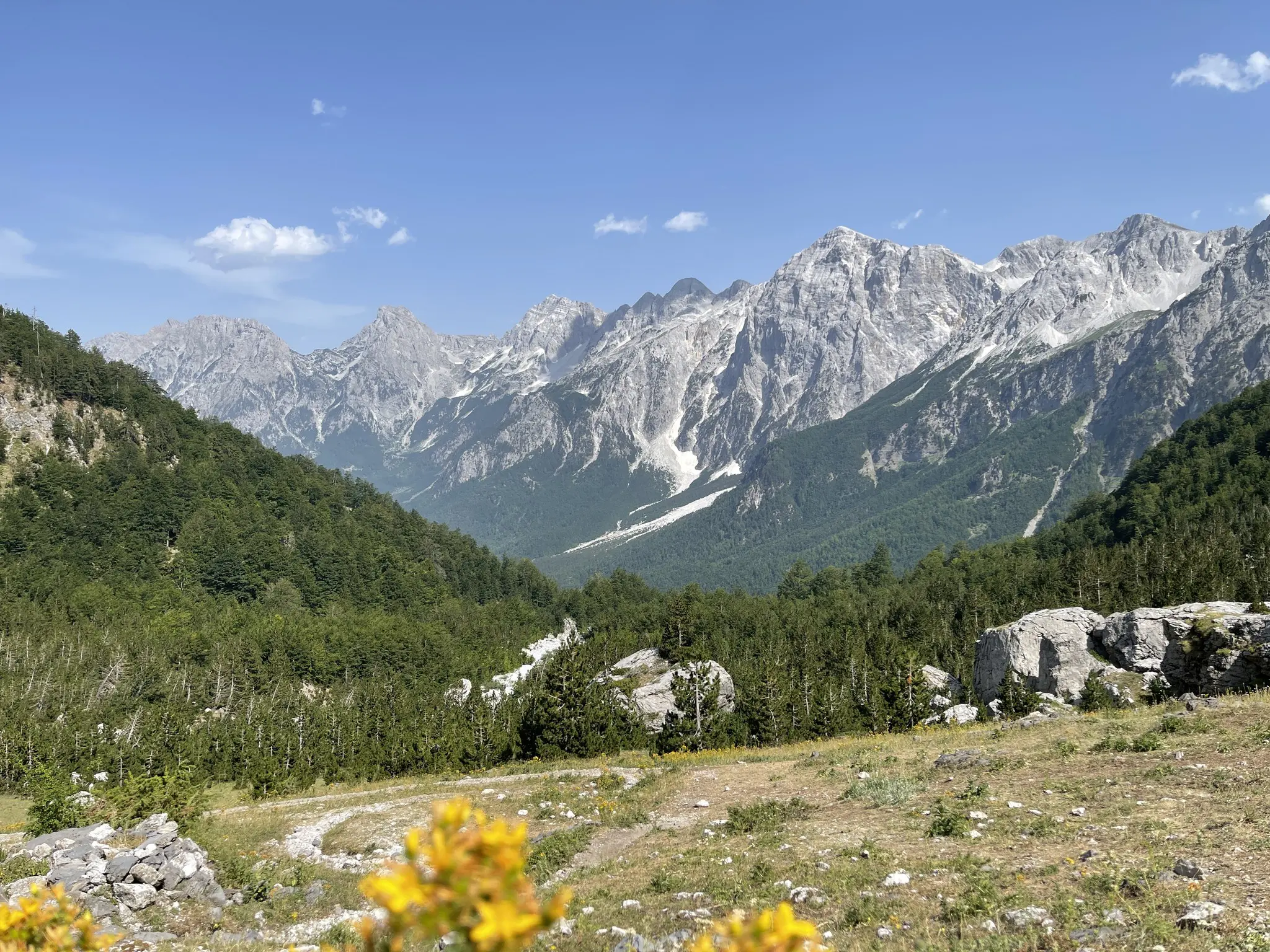
August is very much like July: hot, sometimes very hot days and often the driest conditions of the season. It is also the busiest time on the trail. If calm is what you're after, keep that in mind.
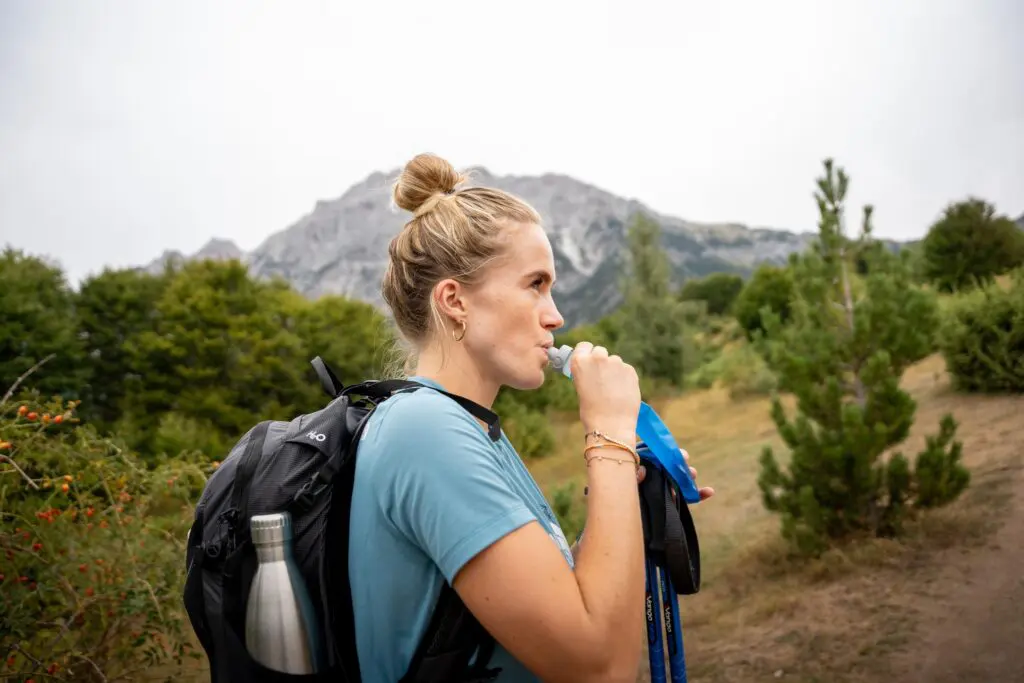
Late in the season, springs can be less plentiful. On long stages, carry enough water and top up your supplies whenever you can. The heat makes this habit particularly important: heat exhaustion and dehydration are real risks, not just inconveniences.
A hat, sunglasses, high-factor sun cream and light, covering clothing all have their place in your kit. The idea isn't to load yourself up unnecessarily, but to be able to walk without suffering the sun for hours. For any specific health question, ask your doctor for advice. And as in July, don't let the often dry conditions make you forget the possible afternoon thunderstorms.
September: cooler and quieter, but less predictable
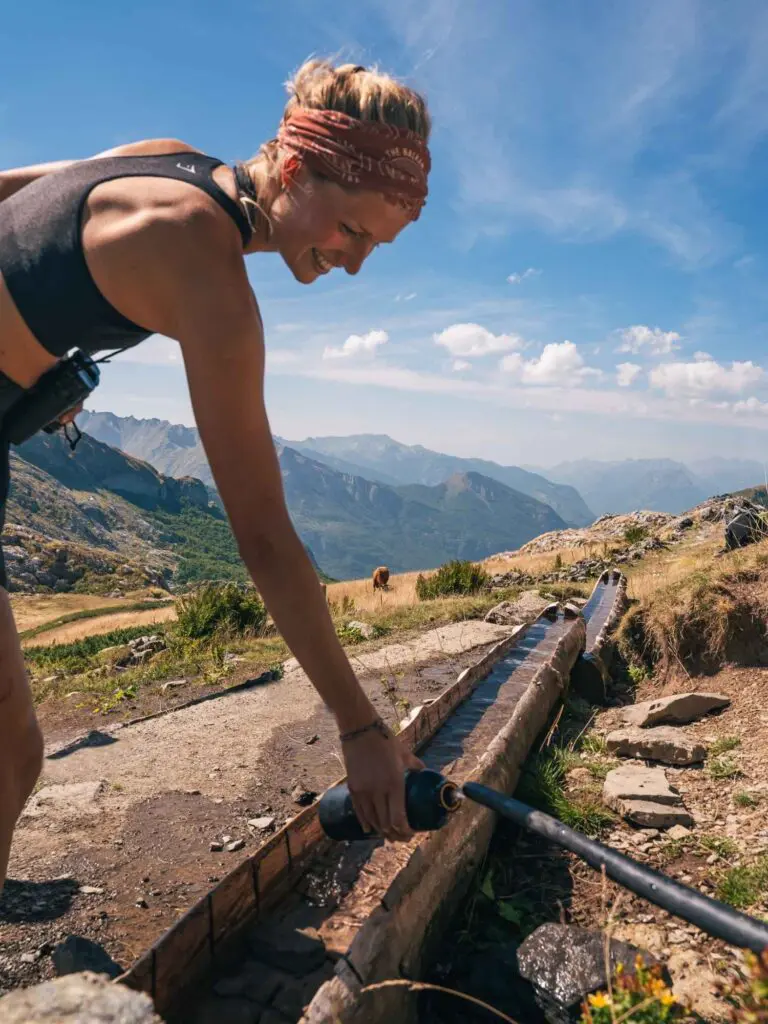
In September, temperatures drop and the climbs become more comfortable. The trail has fewer hikers. The days are often clear and stable, with excellent visibility: ideal for making the most of the landscape around you.
The flip side? The days get shorter and the nights colder. From mid-September, the weather becomes more changeable. Rainy spells are more frequent and the first cold snaps can bring frost, even snow on the heights.
You also need to take account of life in the high pastures. Some guesthouses close when the shepherds leave their summer places. A late departure therefore calls for careful preparation, beyond simply choosing your clothes.
The best time to hike in the Balkans therefore depends on your priorities: greenery in June, summer heat in July and August, or coolness and fewer people in September. To put these differences in context, see the 'when to hike' section of our complete guide to the Peaks of the Balkans.
Thunderstorms in the mountains: keep a margin all season
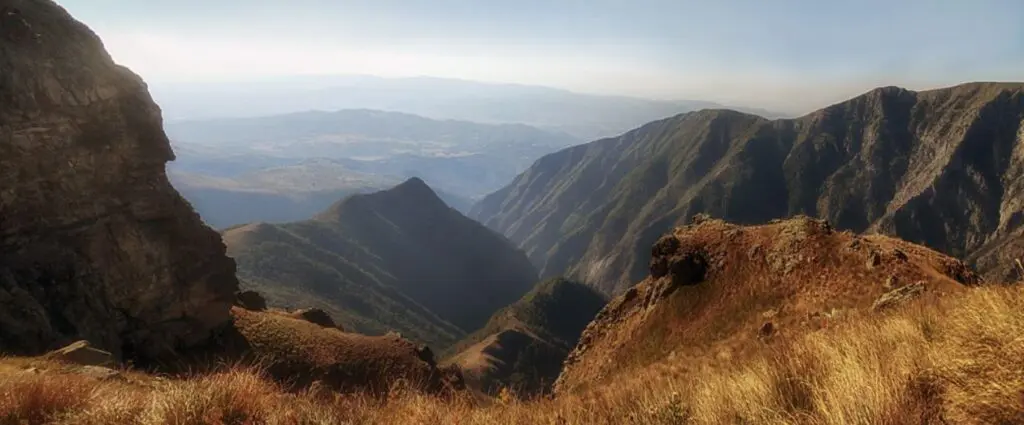
Whichever month you travel, the weather can change in an hour. A clear morning can give way to fog, rain or a thunderstorm in the afternoon. It is one of the most important things to keep in mind on this route.
When a storm approaches, avoid exposed ridges and summits. Better to descend early than late. Fog also makes navigation harder on open passes, even on waymarked sections. Markers on the trail don't remove the difficulties of reduced visibility.
It isn't about walking anxiously, but about staying alert. The forecasts you check before leaving give a trend; how conditions evolve during your stage matters just as much. A magnificent morning remains a magnificent morning, not a promise for the hours that follow.
In your pack, even under a blue sky
- A waterproof jacket and a warm layer, fleece or light down jacket, on every walking day.
- A hat, sunglasses and sun cream.
- Hiking boots you've already worn, with good grip.
- Poles for steep descents and snowfields.
- If you camp, a sleeping bag suited to cold nights.
The kit list details every layer; for the Valbona Pass, see living and preparing the Theth–Valbona crossing.
On the Balkan Trail, plan for cool evenings too
The weekly departures of The Balkan Trail run from early June to early or mid-September. The route passes over the Valbona Pass, at nearly 1,800 metres, where snowfields can persist, and the high-altitude camp of Dobërdol, at around 1,800 metres.
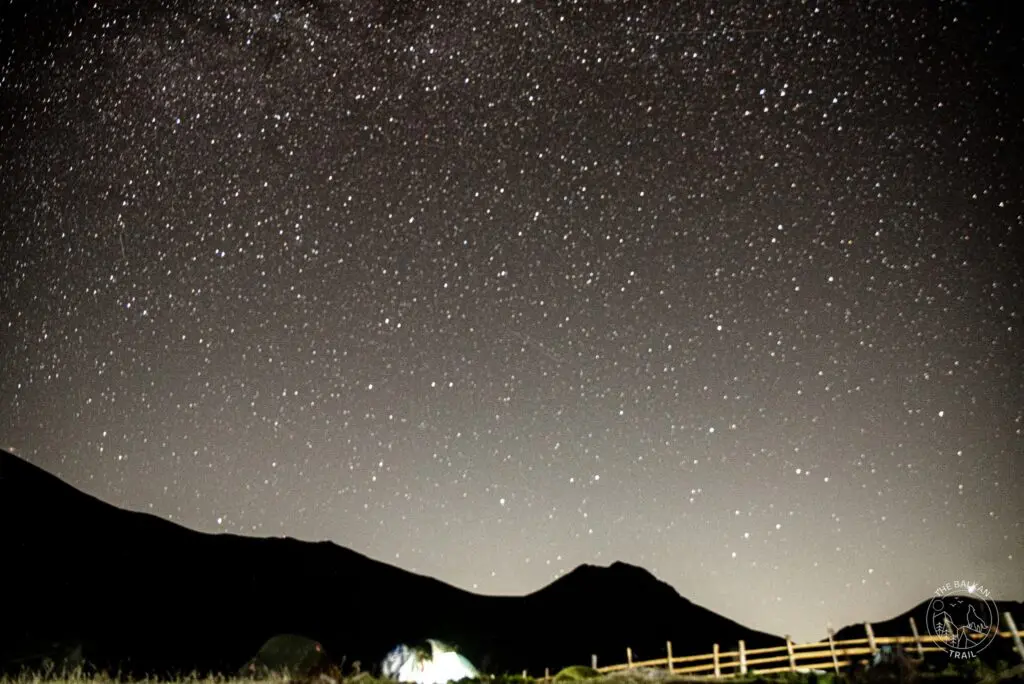
At Dobërdol, mornings and evenings can be cold, even in summer. After a day's walking in the sun, putting on your warm layer is far from a detail. Nights in the valley are also noticeably cooler than the days.
The sleeping bag available to rent has a comfort temperature of about 5 °C. The kit list includes a rain jacket and a warm layer; in bad weather, the group stays together. You can find this information in the FAQ. The main thing, ultimately, is to prepare your bag for the whole day, and not only for the temperature at the start.
To arrive with your legs ready, follow the 12-week training plan.
Frequently asked questions
Which month should I choose for hiking in the Peaks of the Balkans?
Each month has its trade-off: June offers flowering valleys but snow at altitude, July calls for an early start, August brings heat and busy trails, and September is cooler and quieter but less predictable.
Do I need warm clothes in summer?
Yes. Evenings are cool at altitude, even after a hot day. See the kit list for the layers to pack.
How do I deal with thunderstorms in the mountains?
Keep some margin throughout the season and adapt your day to the weather as it develops.
Is the Valbona Pass passable early in the season?
Snowfields can persist early in the season, and the pass peaks at nearly 1,800 m. Details in the guide living and preparing the Theth–Valbona crossing.
Want to discover these valleys and passes? Check the dates and route of the Balkan Trail.